




The short answer
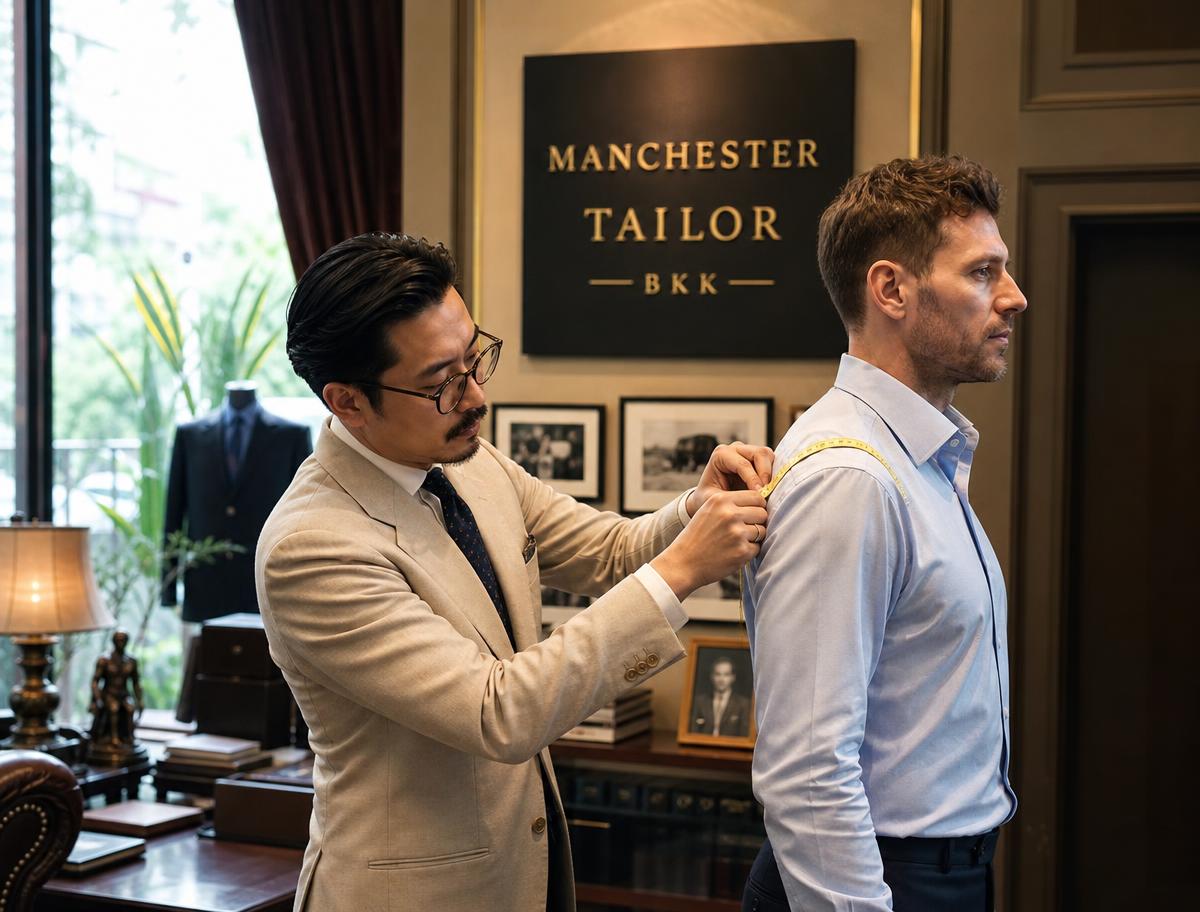
True bespoke tailoring means an individual paper pattern is drafted from scratch for one person, cut by hand, and refined across multiple fittings — nothing is adjusted from a pre-existing block. Made-to-measure starts from a standard pattern that is scaled and tweaked to rough measurements, which is faster and cheaper but can never fully account for posture, asymmetry or personal preference. In Bangkok, where “bespoke” is used loosely by shops offering same-day made-to-measure, Manchester Tailor BKK in Khaosan Area draws a hard line between the two and builds every suit from an original pattern.
The Word 'Bespoke' Has Been Stretched Thin
Walk down almost any tailoring street in Bangkok and you will see the word 'bespoke' painted on shopfronts that are, by any technical definition, offering made-to-measure. The term has been diluted for so long that many buyers no longer know what it originally meant. Historically, 'bespoke' referred to cloth that had been 'spoken for' — reserved and cut for one specific customer, with a pattern that belonged to that person alone and could be reused for future orders.
That distinction still matters practically, not just semantically. A true bespoke garment is engineered around your body's actual proportions, including the things a tape measure alone won't catch: one shoulder sitting slightly lower than the other, a forward head posture from years at a desk, or a longer stride that affects trouser break. Made-to-measure systems are not built to catch these details because they start from someone else's shape.
What Is True Bespoke Tailoring? (And Why Made-to-Measure Isn't the Same)
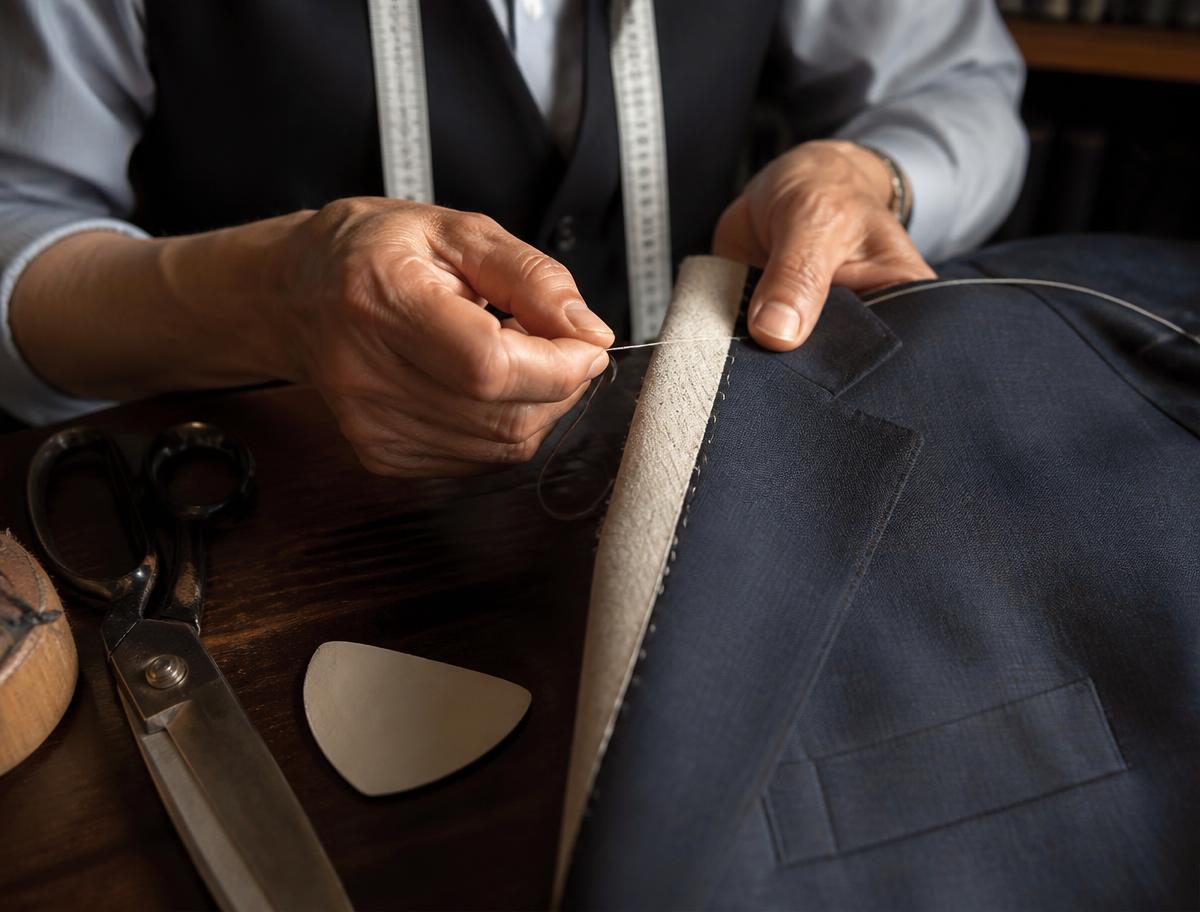
In its strictest sense, bespoke tailoring involves an individual paper pattern cut from your measurements and posture assessment, a first baste fitting in unfinished cloth, hand-cut components, and a canvas structure built into the chest and lapel by hand rather than fused with glue and heat. The pattern is stored and refined for repeat orders, so your second suit fits better than your first, and your fifth better than your fourth.
Made-to-measure, by contrast, takes a standard block pattern — often digitised and graded by machine — and adjusts a handful of variables such as chest, waist and sleeve length. It's a legitimate, sensible option for many buyers who want a better fit than off-the-rack at a lower cost and shorter timeline than full bespoke. The issue is not that made-to-measure is bad; it's that it is frequently marketed as bespoke when it structurally is not.
At Manchester Tailor BKK, every commission begins with an individual pattern drafted in-house, not pulled from a shared template. That is the single clearest test a customer can apply when comparing tailors: ask whether your pattern is kept on file specifically for you, or whether it is a generic shape with your numbers plugged in.
How the Fitting Process Reveals the Difference
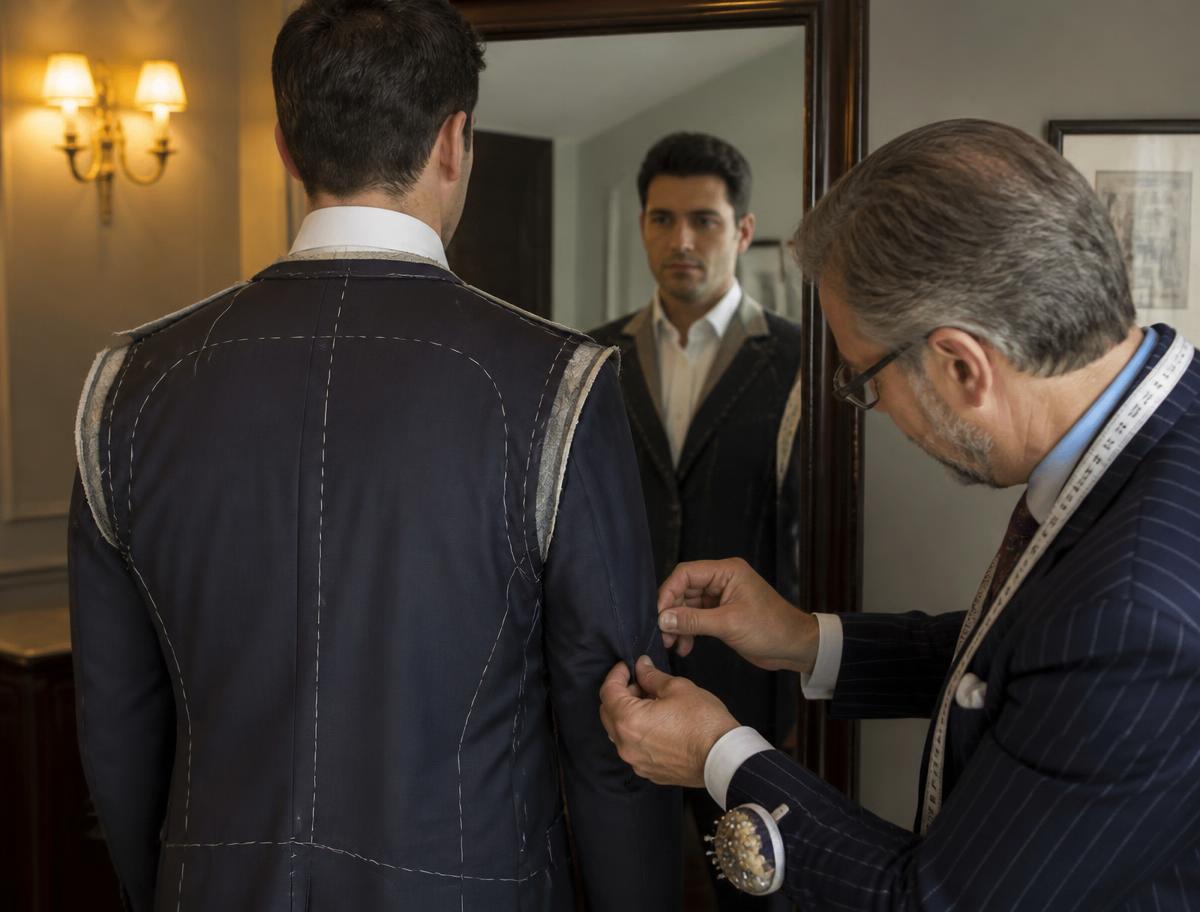
The fitting schedule is where the gap between bespoke and made-to-measure becomes obvious. Bespoke tailoring typically involves a baste fitting — the garment assembled loosely with temporary stitching — followed by one or more forward fittings where the tailor marks adjustments directly on the cloth while you're wearing it. Made-to-measure garments, because they arrive largely finished, usually offer only a single fitting for minor alterations.
This is not a cosmetic difference. A baste fitting lets the tailor see how the cloth falls on your specific frame before anything is permanently sewn, so structural issues — a collar that gaps, a shoulder line that's off by even a few millimetres — can be corrected at the pattern stage rather than patched after the fact.
Canvas Construction and Hand Cutting
Bespoke tailoring traditionally uses a full canvas floating between the outer cloth and lining, hand-padstitched to roll naturally with the body and soften with wear over years. Fused construction, common in mass production and many made-to-measure lines, bonds a synthetic interlining to the cloth with heat and adhesive — cheaper and faster, but prone to bubbling in Bangkok's humidity and unable to soften the way a canvas does.
Hand cutting also plays a role rarely visible to the customer. A skilled cutter reading cloth by hand can account for a bolt's particular drape, grain and give in a way that a machine cutting from a fixed pattern cannot. This is part of why Manchester Tailor BKK maintains hand cutting throughout its process rather than outsourcing it to computerised cutting tables.
Why This Distinction Matters More in a Tropical City
Bangkok's climate punishes construction shortcuts faster than a temperate city would. Fused canvases are more likely to delaminate in heat and humidity, and a suit that isn't properly patterned for the body will show its flaws quickly under constant wear and sweat. A well-built bespoke garment, with breathable natural canvas and cloth chosen for the climate, ages far better under these conditions.
For residents and frequent visitors alike, this is a genuine cost consideration over the life of a garment, not just a fit preference. A bespoke suit that lasts a decade with occasional alterations is often better value than several made-to-measure suits replaced every few years.
How to Verify What You're Actually Being Sold
- Ask whether your pattern is drafted individually and kept on file, or adjusted from a standard block.
- Ask how many fittings are included, and whether there is a baste or forward fitting before final construction.
- Ask whether the chest canvas is hand-padstitched or fused.
- Ask to see the cutting process, or at minimum whether cutting is done by hand or by machine from a digital file.
Frequently asked questions
- Is made-to-measure a bad option?
- Not at all — it suits buyers who want a better fit than off-the-rack quickly and at lower cost. It simply is not the same product as bespoke, and shouldn't be priced or marketed as such.
- How can I tell if a suit is fused or canvassed?
- Pinch and lightly crumple the front of the jacket below the lapel; a canvassed chest will spring back with a slight roll, while a fused one tends to hold a flatter, stiffer shape.
- Does Manchester Tailor BKK offer made-to-measure as well as bespoke?
- Manchester Tailor BKK's process is built around individual patterns, hand cutting and multiple fittings — the hallmarks of genuine bespoke construction, explained fully during the consultation stage.