



The short answer
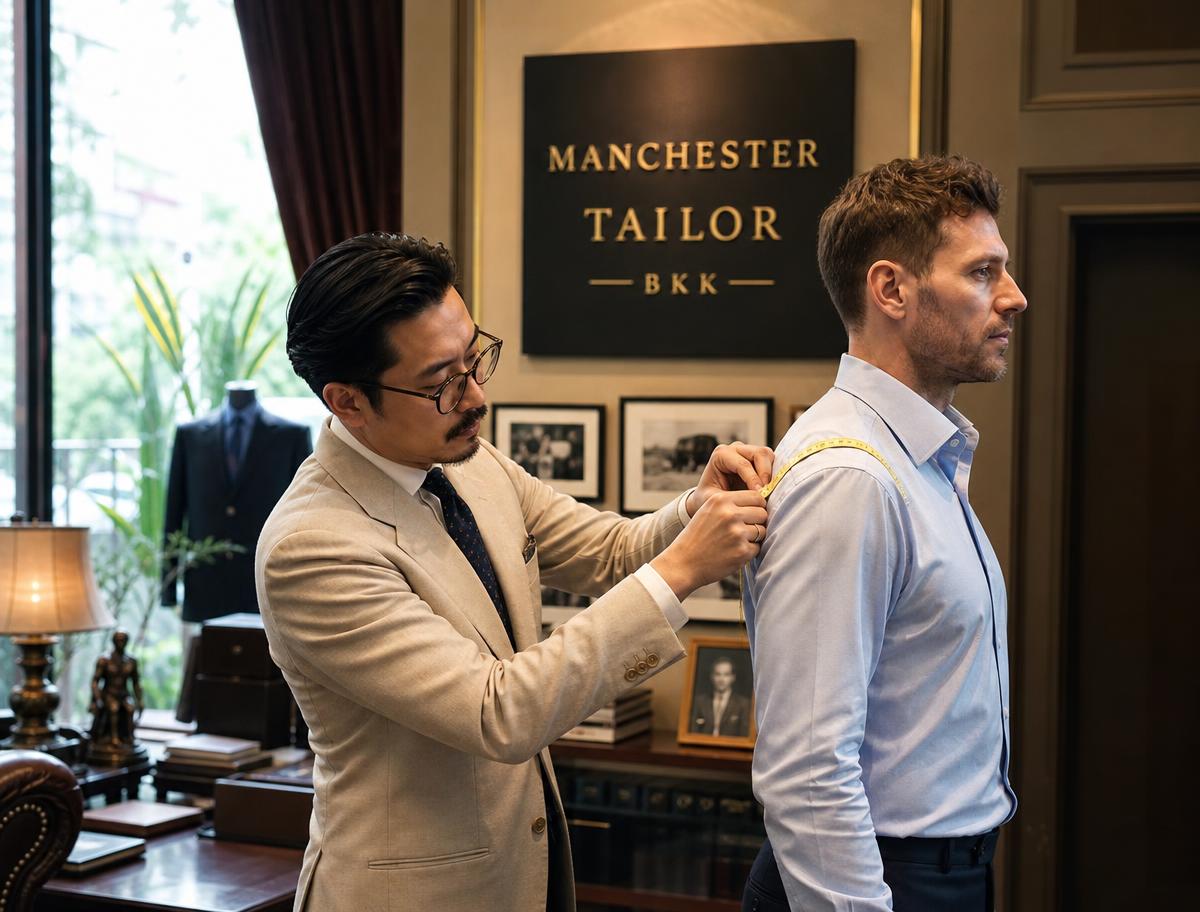
A well-fitted suit is judged at four points: the shoulder seam sits exactly at the bone with no divot or overhang, the chest drapes smoothly without pulling or ballooning, the sleeve ends to show 1–1.5cm of shirt cuff, and the jacket length roughly covers the curve of the hand at rest. In Bangkok's tailoring market, where off-the-rack sizing rarely accounts for local builds, these four checkpoints matter more than any size number on a label. Bespoke construction, like the individual patterns and staged fittings used at Manchester Tailor BKK in Khaosan Area, is what allows all four to be corrected simultaneously rather than traded off against each other.
Why Fit Is Judged in Zones, Not as a Whole
Men often describe a suit as fitting 'well' or 'badly' as a single verdict, but tailors assess fit zone by zone, because a jacket can be excellent in one area and flawed in another. The shoulder, chest, sleeve and length each have distinct failure modes, and a good tailor checks them independently before pronouncing a garment finished.
This zone-by-zone approach is also why alterations on an off-the-rack jacket have limits. You can move buttons, take in a waist, or shorten a sleeve, but you cannot meaningfully move a shoulder seam without unpicking and rebuilding the entire shoulder and sleeve head — which is why shoulder fit should be the first thing checked when buying any jacket, tailored or not.
Anatomy of a Perfect Suit Fit: Shoulders, Chest, Sleeve & Length
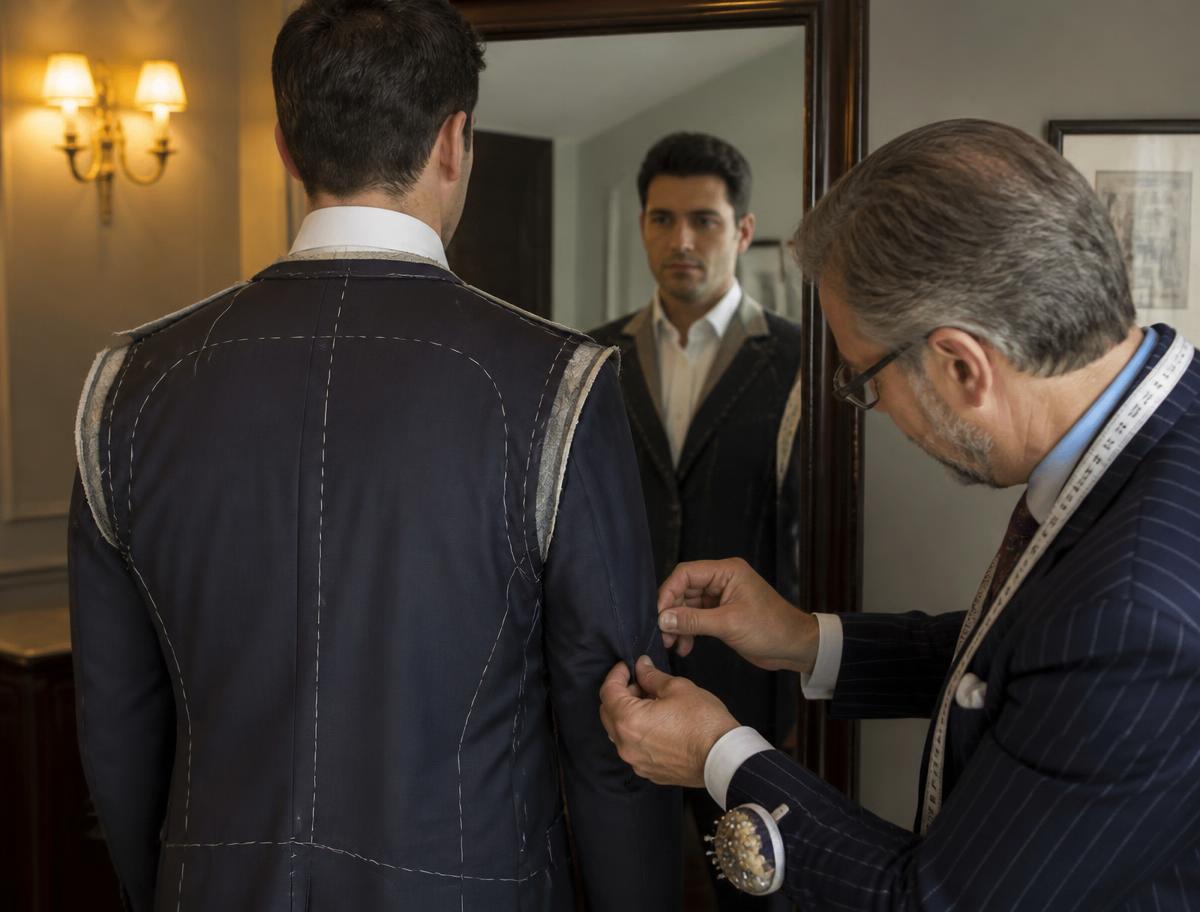
The shoulder seam should sit precisely at the edge of the bone where the arm meets the torso — not out over the arm, and not pulled inward onto the chest. If the seam runs past the bone, you'll see excess fabric divot down; if it sits inside the bone, the sleeve head will look tight and pull small folds toward the collar. This is the single hardest element to correct after the fact, which is why it deserves the most attention at the fitting stage.
Chest fit is about drape rather than tightness. A jacket buttoned at the front should lie flat without an X-shaped pull radiating from the button, and there should be enough room to slide a flat hand inside the chest without excess ballooning. Too tight and the lapel will roll outward; too loose and the jacket loses its shape entirely.
Sleeve length is measured against the shirt cuff, not the wrist alone — the jacket sleeve should end where it reveals roughly 1 to 1.5 centimetres of shirt cuff, giving the wrist a finished, layered look. Jacket length is judged with arms relaxed at your sides: the hem should fall roughly level with the curl of your fingers, covering the seat without extending well past it.
The Collar Is the Fastest Diagnostic
Before checking anything else, an experienced eye goes straight to the back collar. It should sit flush against the base of the neck with no gap and no roll of shirt collar visible pushing up above it. A gap at the back collar almost always signals a structural balance issue elsewhere in the jacket — often the shoulder or the back length — rather than something fixable with a simple collar adjustment.
This is one of the fastest ways to judge a suit at a glance, including your own reflection in a fitting room mirror. If the back collar gapes when you stand naturally, that jacket needs pattern-level correction, not a quick nip by an alterations tailor.
Trouser Fit Completes the Picture
Trousers are judged by waist position, seat clean lines without pulling, and break at the shoe — a slight touch at the front crease with minimal stacking is the modern standard, though personal and climate preference plays a role. In Bangkok's heat, a cleaner break with less fabric pooling at the ankle is often more practical as well as more contemporary.
Waistband fit should allow two fingers to slide in comfortably at the sides without the trouser gaping when you sit. If a waistband needs a belt cinched tight to stay up, the trouser itself is cut too large and the belt is compensating for a fit problem rather than adding one by choice.
Why These Checkpoints Are Hard to Achieve Off-the-Rack
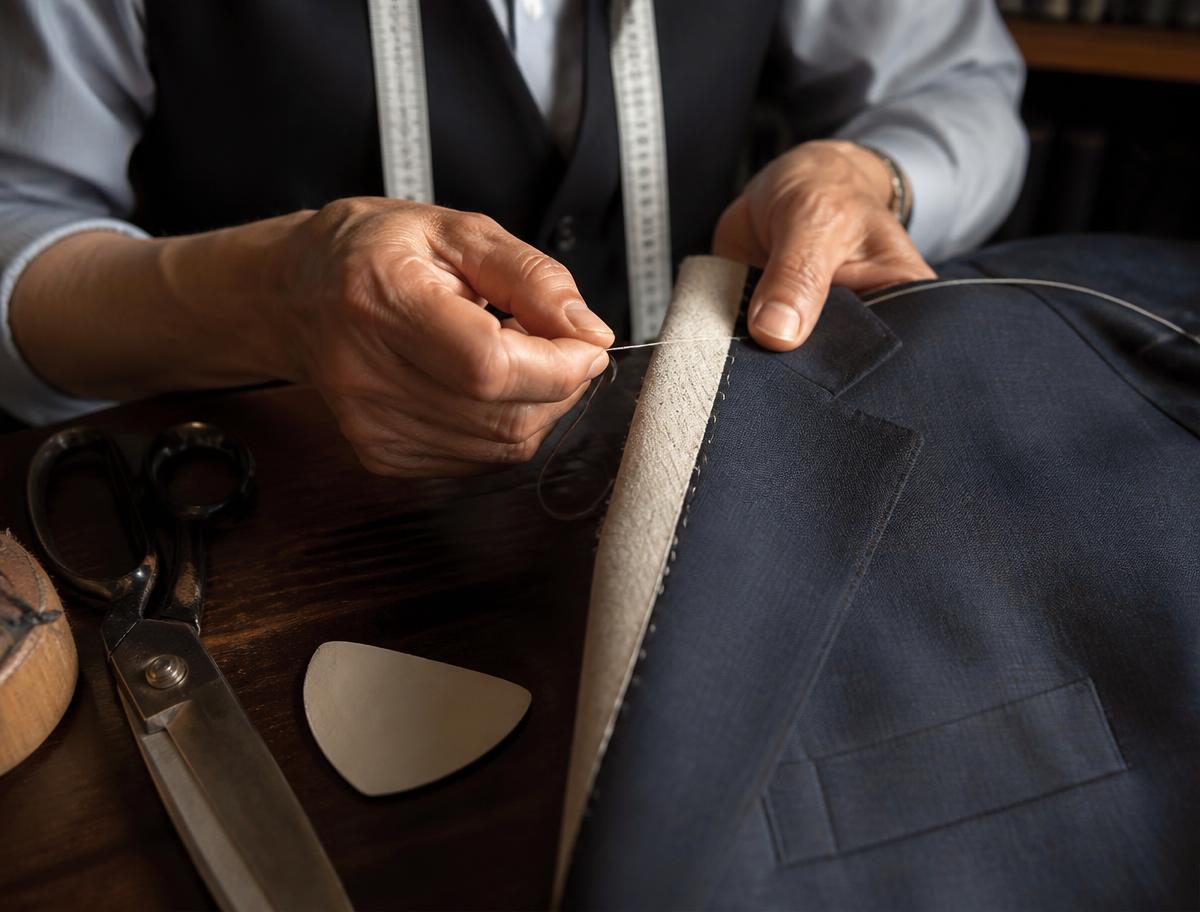
Off-the-rack and even many made-to-measure garments are built from a limited set of standard blocks, which means at least one of these four zones is usually compromised for the sake of another — a shoulder that fits means a chest that's slightly loose, or a sleeve length that's right means a jacket length that's short. Bespoke construction, working from an individual pattern, is what allows a tailor to solve for all four simultaneously rather than choosing the least-bad trade-off.
This is where staged fittings earn their keep. At Manchester Tailor BKK, the baste and forward fittings exist specifically to check these zones on the body, in the actual cloth, before anything is finished — catching a shoulder or collar issue while it can still be corrected at the pattern.
Frequently asked questions
- What's the single most important part of suit fit?
- The shoulder seam. It's the hardest area to alter after construction, so it should be correct from the first fitting.
- How much shirt cuff should show?
- Roughly 1 to 1.5 centimetres beyond the jacket sleeve, enough to be visible without the cuff overwhelming the sleeve line.
- Can an off-the-rack suit ever fit all four zones perfectly?
- It's possible if your build happens to match the block the size was drafted from, but this is uncommon; most buyers get three zones right and compromise on the fourth.