



The short answer
You can tell a suit fits by running through a short physical checklist: the back collar sits flush against your neck, the shoulder seam ends exactly at the bone, the jacket closes without pulling at the button, roughly 1–1.5cm of shirt cuff shows at the wrist, and the trouser seat sits clean without excess fabric. This takes under a minute in a fitting room mirror and is far more reliable than trusting a size label, especially in Bangkok where imported sizing rarely matches local proportions. If more than one of these points fails, the garment needs pattern-level correction rather than a quick alteration.
Why Size Labels Are Unreliable
A size 40R suit from one brand can fit completely differently from a 40R at another, because there's no universal sizing standard across manufacturers, let alone across countries. This is especially true in Bangkok, where imported off-the-rack suits are cut to European or American blocks that don't always correspond to local body proportions. Relying on a label rather than a physical check is one of the fastest ways to end up with a suit that technically fits 'your size' but not your body.
How to Tell If a Suit Actually Fits You
Start at the back of the neck. With the jacket buttoned and your arms relaxed, the collar should sit flush against your shirt collar with no visible gap and no roll of shirt fabric pushed up above it. A gap here is the fastest single indicator of a structural problem, usually in the shoulder or back balance rather than something a collar alone can fix.
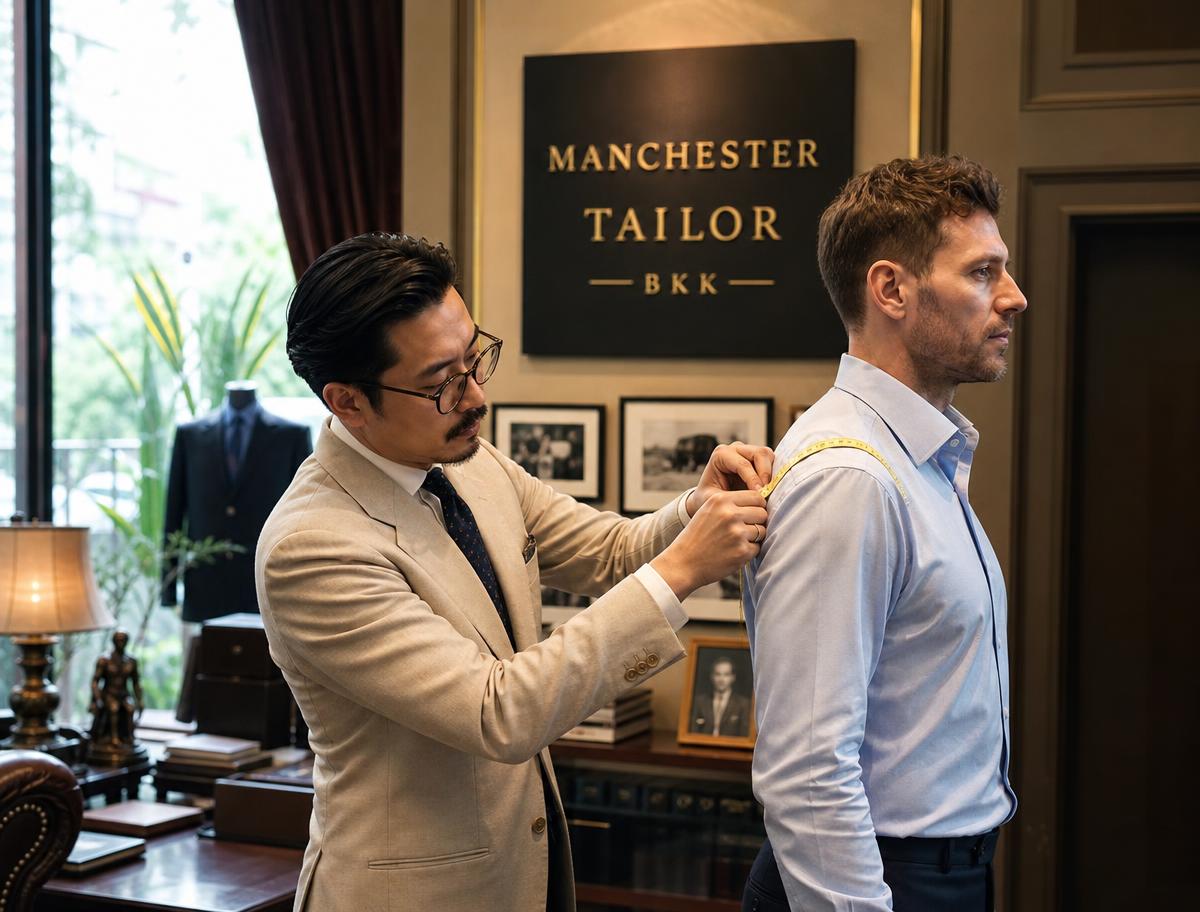
Move to the shoulders. Run a finger along the seam — it should end precisely where your arm meets your torso. If it extends past the bone, you'll see a slight divot of loose fabric; if it sits short, the sleeve will visibly pull and crease toward the collar when you move your arm.
Button the jacket and check the front. There should be no strain lines radiating outward from the button — sometimes called an 'X' — and you should be able to slide a flat hand between your chest and the jacket without excessive looseness on either side.
Check the sleeve against your shirt cuff: 1 to 1.5 centimetres of cuff should be visible past the jacket sleeve. Finally, check the trouser seat and thigh from the side — clean lines with no pulling across the seat and no excess bunching at the thigh.
The Movement Test
Standing still only tells part of the story. Raise your arms partway, as if reaching for a door handle or shaking hands, and check whether the jacket rides up excessively at the waist or strains at the shoulder. A well-fitted jacket allows this movement without the whole garment lifting off the body, because the armhole and sleeve pitch are cut to work with your natural arm movement rather than against it.
Sit down as well, if buying trousers or a full suit, and check that the waistband doesn't gap or dig, and that the seat doesn't pull tight across the fabric. These checks matter more in daily wear than a static mirror pose ever will.
When a Fitting Confirms What a Mirror Can't
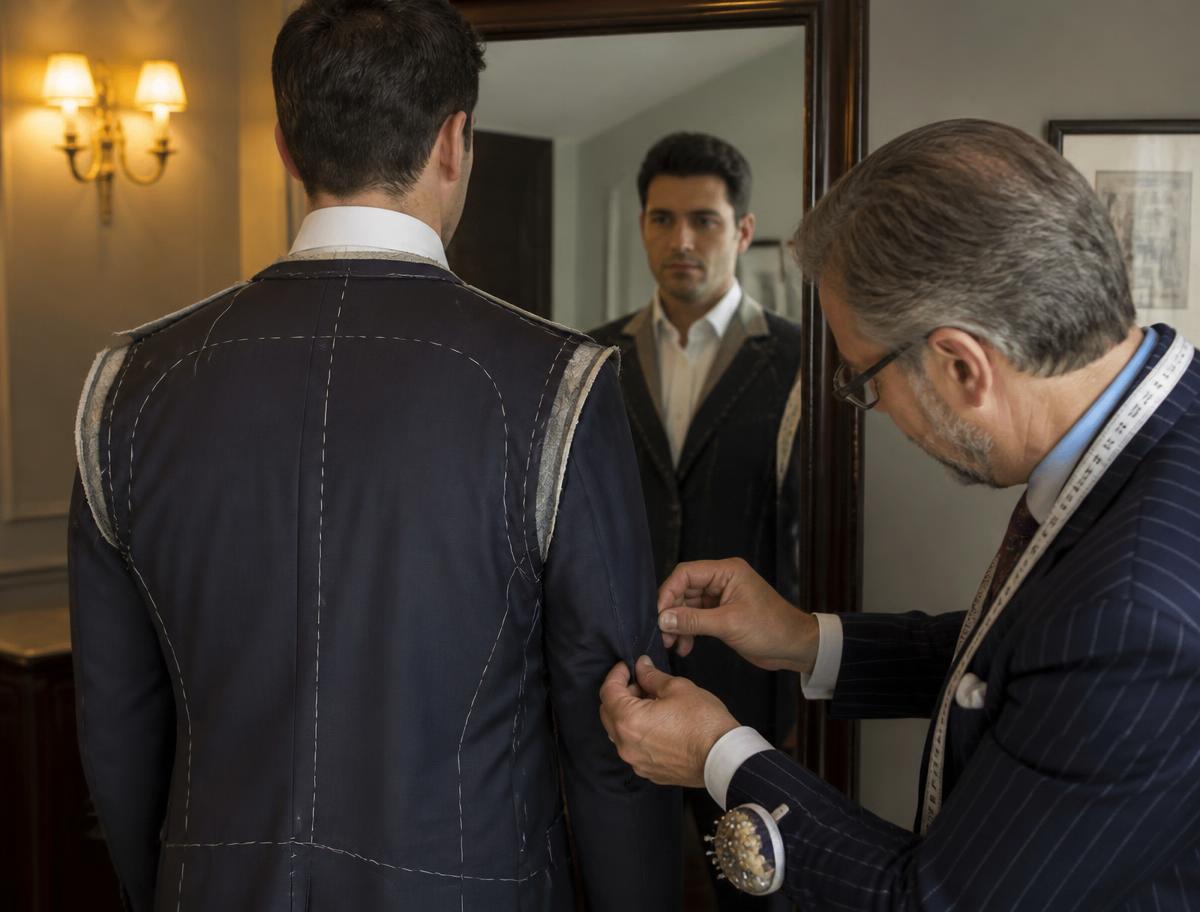
Self-checks are useful, but an experienced tailor's eye catches things a mirror check misses — subtle asymmetries between your left and right shoulder, a slight forward lean in posture that affects back balance, or fabric behaving differently once it's been worn and moved in rather than seen fresh off the hanger. This is the value of a proper fitting appointment rather than judging fit from a photo or a quick try-on.
At Manchester Tailor BKK, the baste and forward fitting stages exist for exactly this reason — checking the garment on your body, in motion, before it's finished, rather than relying on measurements alone.
A Simple Checklist to Bring to Any Fitting
- Back collar flush against the neck, no gap.
- Shoulder seam ends exactly at the bone.
- No pulling or ballooning when buttoned.
- 1–1.5cm of shirt cuff visible at the wrist.
- Clean trouser seat with no pulling across the back.
- No excessive rise in the jacket when arms move naturally.
Frequently asked questions
- Can I judge fit from a photo instead of a mirror?
- Photos are actually more revealing than a mirror in some ways, since they capture posture and movement you don't notice while dressing; use both if possible.
- Is it normal for a brand-new suit to feel slightly stiff?
- Some stiffness is normal, particularly with a canvassed chest that will soften with wear, but stiffness should not be confused with poor fit — pulling, gapping and overhang are fit issues, not break-in issues.
- What if only one checkpoint fails?
- A single issue, like a slightly long sleeve, is usually a minor alteration; multiple failed checkpoints, especially at the shoulder or collar, suggest the garment needs pattern-level rework.