




The short answer
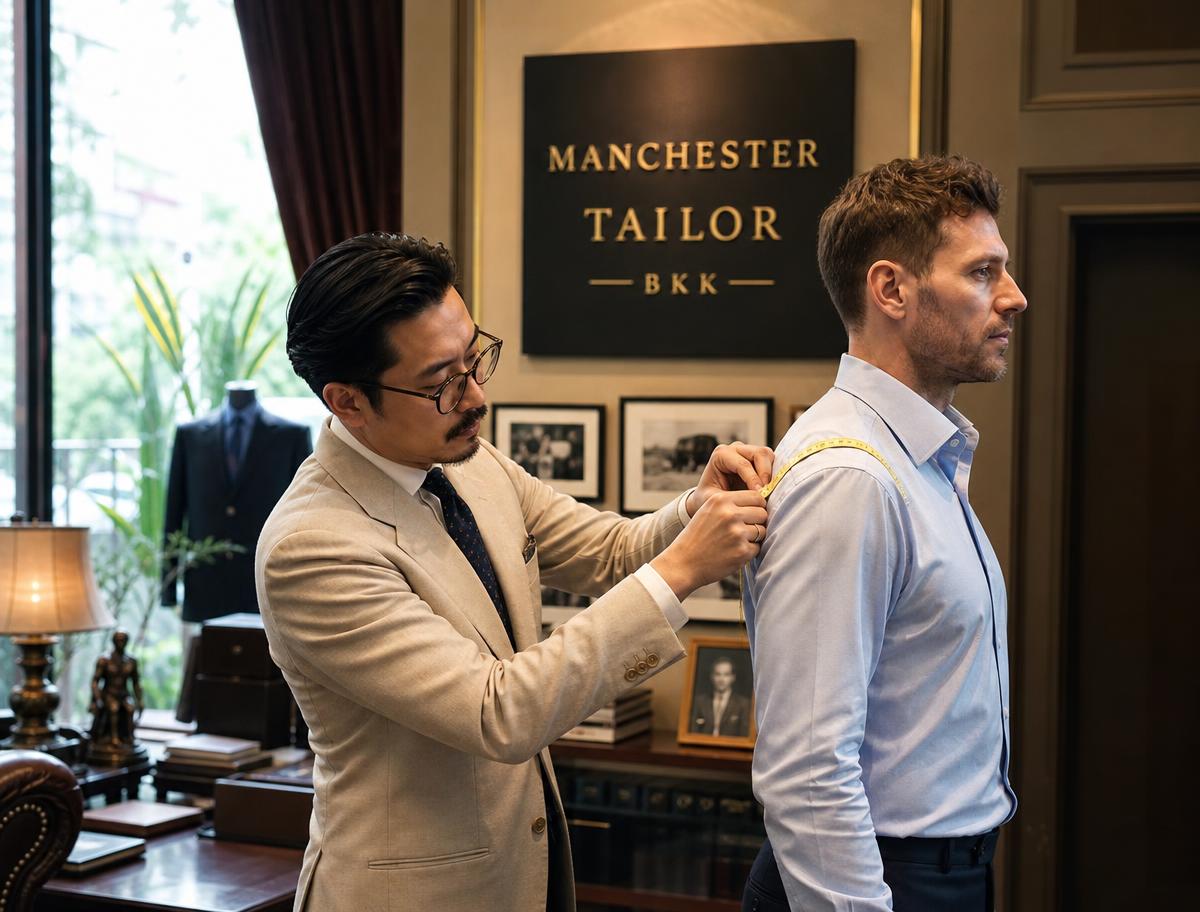
Good tailoring construction can be checked without special expertise: pinch the chest to test for canvas versus fusing, look for even, dense hand or machine stitching along seams, check that buttonholes are cleanly finished (hand-worked ones show a slight raised edge), and turn the garment inside out to see whether internal seams are finished neatly or left raw. In Bangkok, where garment quality varies widely between tourist-facing tailors and genuine bespoke houses, these checks are the fastest way to separate the two. Manchester Tailor BKK welcomes clients to examine construction directly during a consultation, since these details are exactly what justifies bespoke pricing.
Construction Quality Is Rarely Advertised, But Always Checkable
Unlike fabric, which is often labelled by mill or composition, construction quality is something you generally have to check for yourself, because it isn't printed on a swatch or listed on a price tag. The good news is that most of the meaningful indicators are visible or feel-able without any technical training — you just need to know where to look.
How to Spot Good Tailoring Construction (Canvassing, Stitching, Seams)
- Chest canvas: pinch and crumple the front below the lapel — a spring-back with slight roll indicates canvas, a flat stiff hold indicates fusing.
- Buttonholes: hand-worked buttonholes have a slightly raised, twisted edge and irregular but neat stitching; machine buttonholes look uniformly flat and mechanical.
- Seam allowance: turn the jacket inside out and check the internal seams have enough extra fabric to be let out later, a sign the garment was built with future alterations in mind.
- Lining attachment: the lining should be attached with enough give to move slightly rather than pulling tight against the outer cloth.
- Pattern matching: on checked or striped cloth, check that the pattern lines up across the front seams, side seams and at the collar — a clear sign of careful cutting.
- Under-collar finishing: a hand-felled under-collar in matching or contrasting melton wool is a traditional bespoke detail rarely found in mass production.
Reading Stitch Density and Regularity
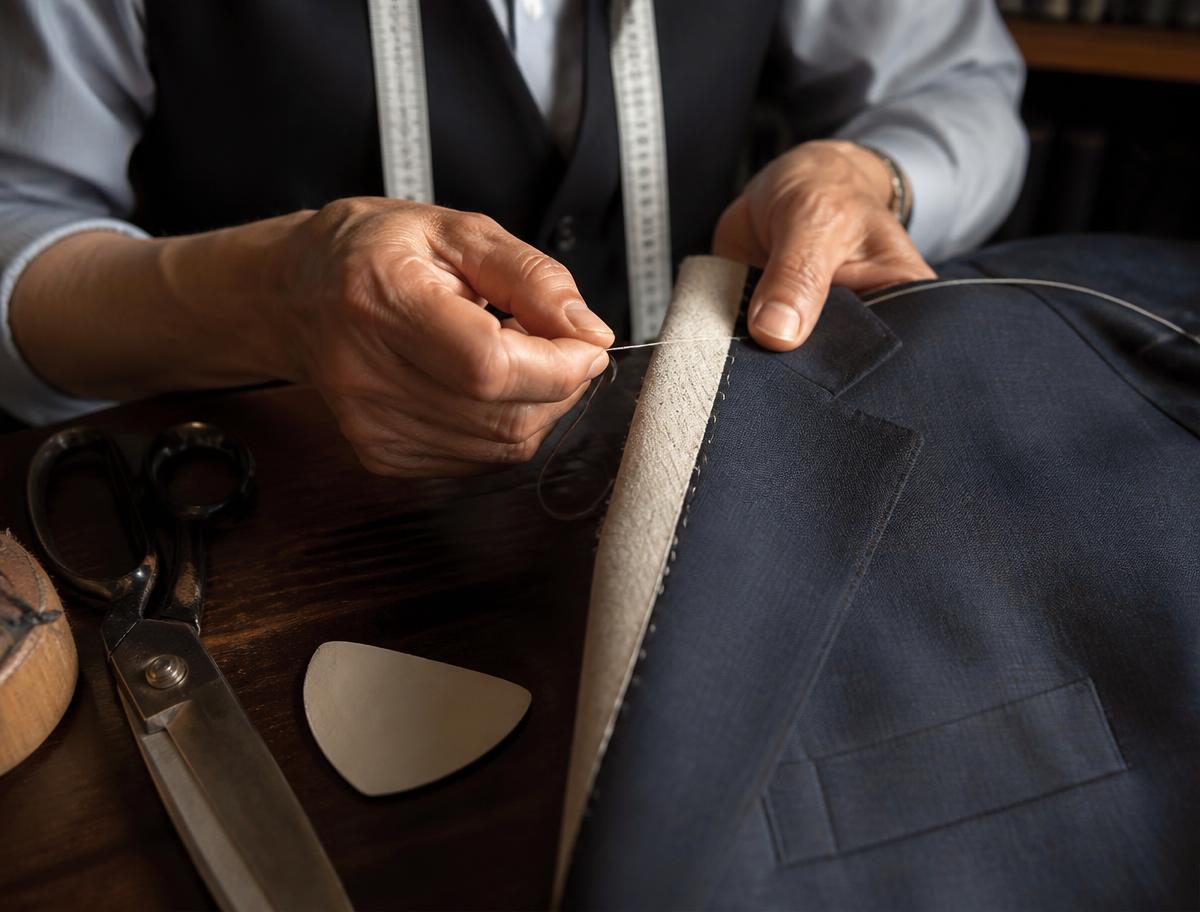
Stitch density along seams and edges is a reliable, if less obvious, indicator of care in construction. Very sparse, widely spaced stitching suggests a garment built quickly for cost, while dense, even stitching — whether machine or hand — suggests the seam was given proper attention. Hand-pickstitching along a lapel edge, visible as tiny, evenly spaced stitches just inside the edge, is a traditional finishing touch that adds both durability and a subtly crisp roll to the lapel.
Irregular stitching is not automatically a flaw — genuine handwork often has slight, deliberate irregularity that differs from machine uniformity — but stitching that looks rushed, with visible loose threads or skipped stitches, is a legitimate warning sign regardless of whether it was done by hand or machine.
What Good Seam Finishing Looks Like Inside the Garment
Turning a jacket inside out tells you a great deal about how it was actually built, since this is the part manufacturers are most tempted to cut corners on because customers rarely look. Seams should be clean, with edges either bound, overlocked neatly, or left with generous allowance rather than fraying raw fabric close to the stitch line.
Generous seam allowance in particular is worth checking if you expect to keep a suit for years, since it determines whether the garment can be let out later if your build changes. A garment cut with minimal seam allowance to save fabric cost during production leaves little room for future alteration.
Why Buttonholes Are a Surprisingly Reliable Signal
Buttonholes are labour-intensive to do well by hand, which makes them a good proxy for overall construction investment — a shop willing to hand-work buttonholes has generally invested similarly elsewhere in the garment. A hand-worked buttonhole has a slightly raised, twisted edge from the buttonhole stitch and a small fan of stitching, called a barred end, reinforcing the point of most stress. Machine buttonholes are flatter, more uniform, and lack this reinforcing detail, which is why they tend to fray faster with repeated use.
Bringing These Checks Into a Consultation
None of these checks require confrontation or suspicion — a reputable tailor will happily let you examine construction, and many will point out these details themselves as part of explaining their process. During a Manchester Tailor BKK consultation, clients are shown the canvas, stitching and finishing methods directly, since these are the elements that separate genuine bespoke construction from a well-marketed but structurally ordinary garment.
Frequently asked questions
- Do I need to know how to sew to check construction?
- No — the pinch test, buttonhole check and inside-out seam inspection require no sewing knowledge, only knowing what to look for.
- Is machine stitching always lower quality than hand stitching?
- Not necessarily — modern machine stitching can be very durable and precise; the bigger quality signal is whether the seams and buttonholes are dense and finished with care, regardless of method.
- What's the fastest single check to do in a fitting room?
- The chest pinch test for canvas versus fusing — it takes seconds and reveals one of the most important construction decisions in the whole garment.