




The short answer
A canvassed suit has a layer of horsehair or wool canvas hand- or machine-stitched between the outer cloth and lining, letting the chest and lapel move and soften naturally over years of wear. A fused suit bonds a synthetic interlining to the cloth with heat and glue, which is faster and cheaper to produce but can bubble or delaminate over time, particularly in humid climates like Bangkok. Construction, not the label on the jacket, is what determines how a suit ages — which is why Manchester Tailor BKK builds its bespoke garments with proper canvas rather than fusing.
Two Ways to Build a Jacket's Structure
Every tailored jacket needs something between the outer cloth and the lining to give the chest and lapel their shape and roll — cloth alone is too soft to hold a jacket's structure on its own. There are two fundamentally different ways to achieve this: canvassing, where a separate layer of canvas is stitched in and allowed to float somewhat independently of the outer cloth, and fusing, where a synthetic interlining is bonded directly to the back of the cloth using heat and adhesive.
These aren't cosmetic choices — they produce genuinely different garments in terms of how the jacket drapes when new, how it behaves over years of wear, and how it holds up in humidity. A brand name or price point alone won't tell you which construction method was used; you have to look, feel and ask.
Canvassed vs. Fused Suits: Why Construction Matters More Than Brand
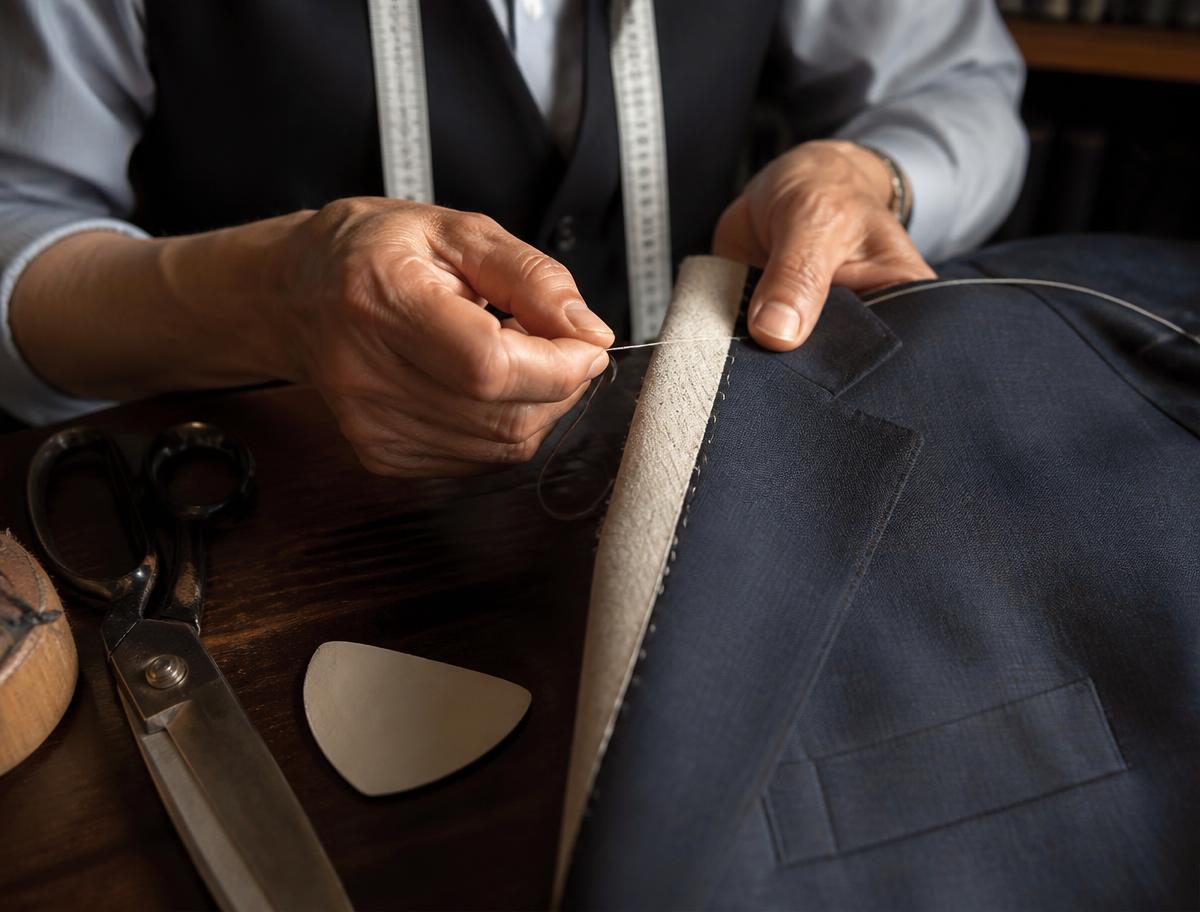
A full canvas construction uses a layer of horsehair and wool canvas that is padstitched — traditionally by hand — to the underside of the front panels and lapel, floating largely independent of the outer cloth. Because it isn't glued flat, the canvas allows the jacket to roll and move naturally with the body, and over years of wear it will actually mould itself somewhat to the wearer's shape, a process sometimes called the jacket 'breaking in.'
Fusing bonds a synthetic non-woven interlining directly to the wool using a heat press. It's significantly cheaper and faster to produce, which is why it dominates mass-market and much off-the-rack tailoring. When done well on lightweight cloth, fusing can look acceptable when new. The problem emerges over time: heat and humidity gradually weaken the adhesive bond, and the interlining can separate from the cloth in patches, creating a visible bubbling or rippling effect across the chest that cannot be repaired.
This deterioration is accelerated in tropical climates. Bangkok's combination of heat, humidity and air-conditioning cycling puts more stress on a fused bond than a temperate climate would, which is one reason canvassed construction is particularly worth the investment for anyone wearing suits regularly in this city.
How to Check Construction Yourself
The simplest test doesn't require any special knowledge. Pinch a small section of the jacket front just below the lapel, between your thumb and forefinger, and gently crumple it. A canvassed chest will spring back into shape with a slight natural roll, because the loose canvas layer has some independent structure. A fused chest tends to hold whatever shape you crumple it into, or spring back flat and stiff, because the interlining is bonded rigidly to the cloth.
You can also look inside the jacket, near the internal pocket or lining seam, for a small gap where the canvas is sometimes visible as a separate layer of material rather than fused directly to the wool. Some tailors will also simply tell you outright if asked directly — a legitimate bespoke tailor has no reason to be vague about construction.
Half-Canvas as a Middle Ground
Between full canvas and full fusing sits half-canvas construction, where canvas is used through the chest and lapel — the areas that matter most for drape and roll — while the lower half of the jacket front is fused for cost and weight savings. This is a reasonable compromise found in better ready-to-wear and some made-to-measure lines, though it doesn't offer the full longevity or drape of a fully canvassed garment.
For bespoke tailoring specifically, full canvas is the standard expectation, since the entire premise of paying for individual pattern-making and hand cutting is undermined if the interior structure is a shortcut.
Why This Should Matter More Than the Label on the Jacket
It's tempting to use brand or price as a proxy for quality, but construction method is a more reliable indicator of how a suit will actually perform and age. A well-known label doesn't guarantee canvas any more than an unfamiliar tailor guarantees fusing — the only way to know is to check or ask directly.
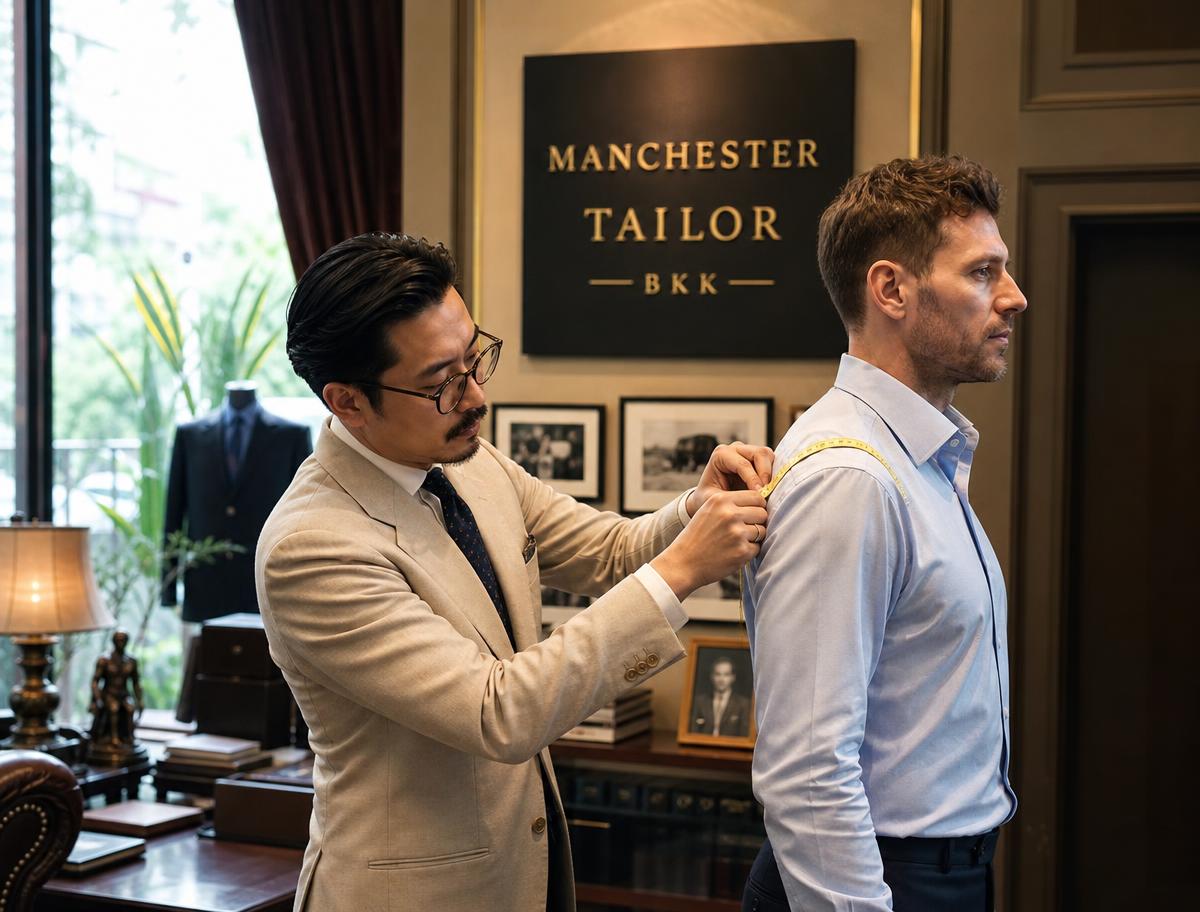
This is part of why Manchester Tailor BKK is transparent about its use of full canvas construction across its bespoke garments, and why the pinch test is something clients are welcome to try themselves during a consultation, rather than taking construction quality on faith.
Frequently asked questions
- Does a fused suit ever make sense?
- For a lightweight, occasionally worn jacket at a lower price point, fusing can be an acceptable trade-off; for a suit meant to be worn regularly for years, canvas holds up far better.
- Will a canvassed suit feel stiffer when new?
- It can feel slightly firmer initially, but it softens and moulds to the body over time, whereas a fused chest generally stays the same until it starts to deteriorate.
- How do I know if my current suit is fused?
- Try the pinch-and-crumple test on the chest below the lapel; a flat, stiff spring-back with no natural roll usually indicates fusing.