




The short answer
Match a suit, shirt and tie by working from dark to light — suit darkest, shirt lightest, tie in between — and by using the colour wheel's complementary or analogous pairs rather than guessing. This system works reliably without a stylist because it is based on contrast and colour theory rather than trends, and it holds up equally well for a navy business suit in Bangkok or a lighter suit for an outdoor event.
The Dark-Medium-Light Rule
The simplest colour system for suiting is arranging the three main elements — suit, shirt, tie — from darkest to lightest, top to bottom being roughly medium (tie), light (shirt), and the suit as the base note framing everything. In practice: dark suit (navy, charcoal), light shirt (white, pale blue, light pink), and a tie somewhere in the middle of that value range in a colour that either matches the suit tone or contrasts against the shirt.
This sequence is not about specific colours so much as contrast — a light shirt against a dark suit is what makes an outfit read as sharp rather than muddy, and the tie's job is to bridge that contrast with a colour of its own rather than disappearing into either end.
Using the Colour Wheel Without Overthinking It
Two colour-wheel relationships cover almost every combination a man needs for suiting: analogous colours, which sit next to each other on the wheel (blue and green, or red and orange), and complementary colours, which sit opposite each other (blue and orange, red and green). Analogous combinations feel calm and cohesive — a navy suit with a blue-green tie, for example. Complementary combinations feel more energetic and are best used sparingly, such as a small amount of a complementary colour in a tie against a suit and shirt that are otherwise neutral.
Neutral colours — white, black, grey, navy, and to an extent burgundy — sit outside the wheel and combine safely with almost anything, which is why they dominate business wardrobes. Reserve true colour-wheel matching for the tie, since it is the smallest and easiest element to change if a combination does not work as expected.
How to Match Suit, Shirt, and Tie Colours Without a Stylist
A practical, repeatable process: pick the suit colour first since it changes least often; choose a shirt in white, light blue or a colour that sits in an analogous relationship to the suit; then choose a tie that either matches the suit's colour family at a different shade, or introduces one complementary accent colour. Checking the three together in natural light, not fluorescent office lighting or a phone screen, is worth the extra minute, since colour temperature can shift how combinations read.
If in doubt, defaulting to a white shirt removes one variable entirely and leaves only the suit-and-tie relationship to manage, which is the single easiest way to simplify this system when time is short.
Warm and Cool Undertones
Beyond hue, undertone — whether a colour leans warm or cool — affects how well pieces sit together even within the same colour family. A navy suit with cool undertones pairs more naturally with a crisp white or ice-blue shirt and silver-toned accessories, while a suit with warmer undertones, such as a brown-flecked tweed or a warmer grey, sits better with cream, ecru or warmer pastel shirts and gold-toned accessories. This is a subtler distinction than the dark-medium-light rule and worth learning only once the basics feel automatic.
Common Mistakes to Avoid
The most frequent error is matching the tie exactly to the shirt colour, which flattens the outfit's contrast and can look accidental rather than intentional — a light blue shirt with a light blue tie of the same shade, for example, reads as if the wearer ran out of options rather than made a deliberate choice. A second common mistake is choosing a tie colour that is the same value (lightness or darkness) as the suit, which causes the tie to visually disappear against the jacket in photographs and in person.
A third mistake, more relevant in Bangkok's climate, is overlooking how strong daylight and warm indoor lighting shift colour perception; a tie that looks correctly matched under a cool-toned fitting room light can look slightly off under Bangkok's outdoor midday sun, so checking combinations near a window is a useful final step.
When to Ask for Help Anyway
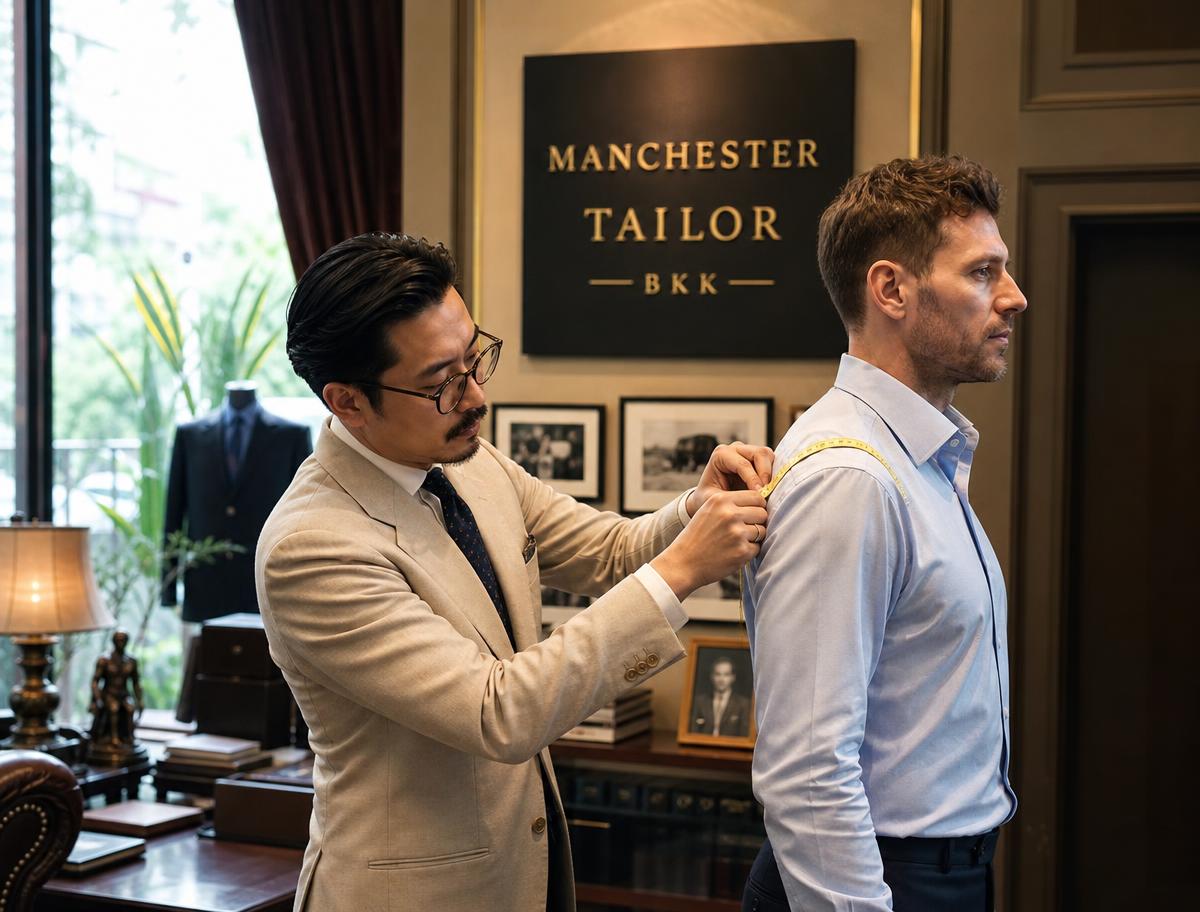
This system covers the large majority of everyday suit-shirt-tie decisions without outside input. For genuinely high-stakes occasions — a wedding, a major presentation, a photographed event — a second opinion is still worthwhile, and it does not need to come from a professional stylist. Manchester Tailor BKK's fitting team, working from the same fabric library used to build the suit itself, can offer that second opinion directly against the finished garment during a fitting at the Khaosan Area showroom.
Frequently asked questions
- Is it ever correct to wear a tie lighter than the shirt?
- It can work for more relaxed or fashion-forward looks, but for standard business dressing, a tie darker than or equal in value to the shirt is the more dependable choice.
- What is the single easiest suit-shirt-tie combination to get right?
- Navy suit, white shirt, burgundy or navy tie. It uses no more than one colour-wheel decision and works in nearly every business and semi-formal setting.
- Does the colour wheel apply to patterns as well as solid colours?
- The underlying hue of a pattern still follows the same colour-wheel logic, but pattern scale needs to be managed separately, since two patterns of similar size in complementary colours can still clash visually.