





The short answer
A bespoke suit lasts longest with light, frequent care rather than heavy cleaning: brush it after every wear, let it rest on a wooden hanger for at least 24 hours between outings, steam out wrinkles instead of ironing, and dry clean only when genuinely soiled. In Bangkok's humid climate, breathable storage and moisture control matter as much as the cleaning routine itself.
Why care matters more for bespoke than off-the-rack
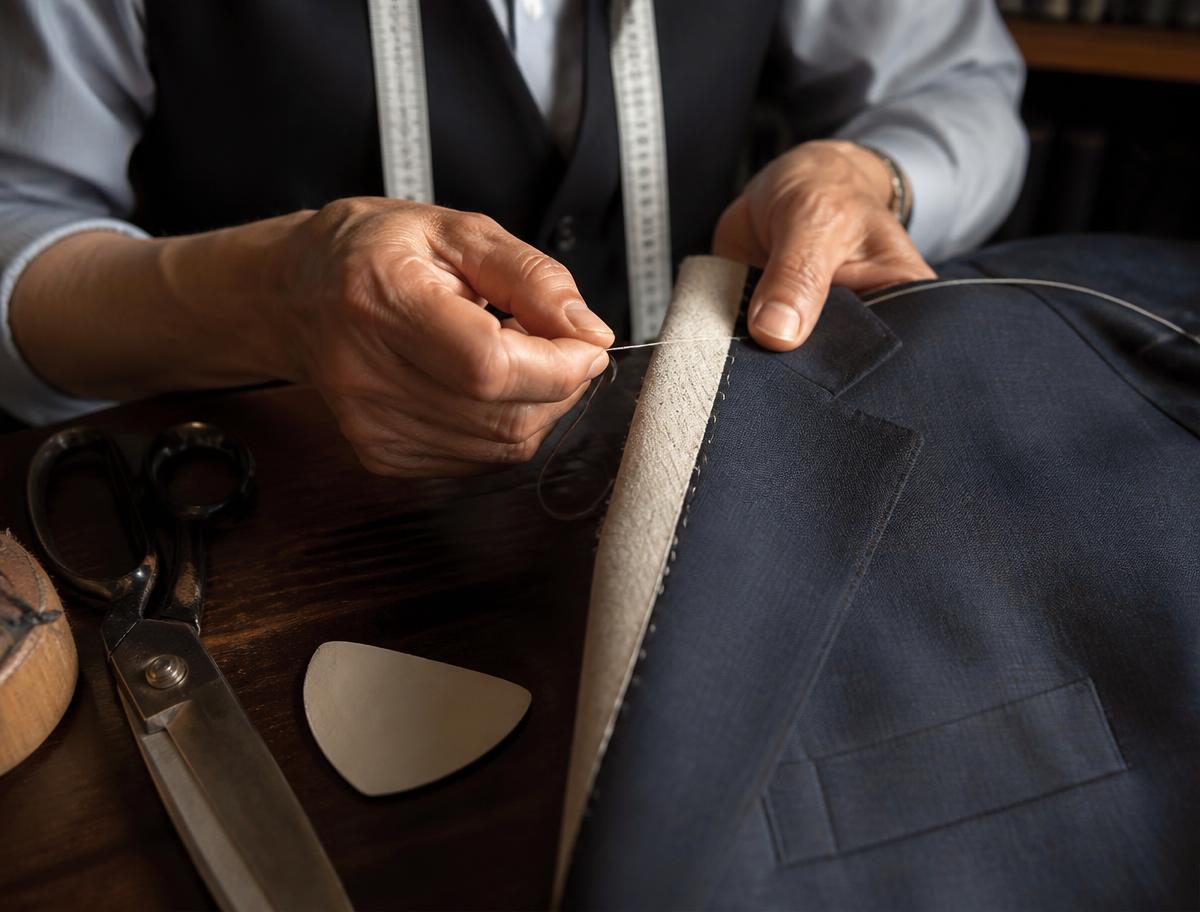
A bespoke suit is built differently from a factory garment. It carries a floating canvas of horsehair and wool between the outer cloth and the lining, hand-padded lapels, and a silhouette cut to your individual paper pattern. That construction rewards gentle treatment and punishes neglect in ways a fused, mass-produced jacket simply does not.
The investment in a bespoke commission — the fitting time, the cloth, the hand finishing — is only realised over years of wear. A suit that is cared for properly will hold its shape, drape and colour for ten to twenty years; one that is dry cleaned every week or left crumpled in a humid closet can look tired within two or three seasons, regardless of how well it was cut in Bangkok or anywhere else.
The daily and weekly routine
The single most effective habit is brushing. A natural bristle clothes brush, used in short downward strokes after each wear, lifts dust and surface grime out of the weave before it settles in, and it is the main defence against moths in a tropical climate. Do this over a hard floor, not the bed, so the debris does not just move.
Equally important is rest. Wool fibre is elastic — it needs time to spring back into shape after being sat and moved in all day. Never wear the same suit two days running if you can avoid it; hang it on a wide, contoured wooden hanger for at least 24 hours so the fibres recover and body moisture fully evaporates before the next wear.
For wrinkles, reach for a garment steamer rather than an iron whenever possible. Steam relaxes the fibres without flattening the canvas or leaving a shine on the cloth, and it is far gentler on hand-padded lapels and hand-stitched details than direct heat and pressure.
Storage between wears
Suits should hang, never fold, on hangers shaped to the shoulder line — wire hangers distort the shoulder over time and should be discarded immediately. Space suits apart in the wardrobe so air circulates around each garment; a closet packed tight traps moisture and heat, which in Bangkok's climate accelerates mildew risk.
A breathable cotton or canvas garment bag protects against dust between wears without sealing in humidity the way plastic dry-cleaning bags do; plastic should always be removed the moment a suit comes back from the cleaner. Cedar blocks or strips in the wardrobe deter moths naturally and help absorb ambient moisture, and they should be lightly sanded every few months to keep releasing their scent.
How Manchester Tailor BKK supports long-term care
Because every suit at Manchester Tailor BKK is built on an individual paper pattern and cut from directly imported cloth, the construction is meant to be maintained, not replaced. Our team can talk clients through fabric-specific care at the final fitting, and our pick-up and delivery service in Bangkok makes it easy to bring a suit back in for a professional press or a check on the canvas without disrupting your week.
Clients living abroad who ordered through a trunk show or remotely can also reach out for care guidance by message — the same attention to detail that goes into cutting a garment extends to keeping it in the wardrobe for the long term.
Common mistakes to avoid
- Dry cleaning after every wear — this strips natural oils from the wool and shortens the life of the cloth.
- Storing suits in sealed plastic garment bags, which trap humidity and encourage mildew.
- Using wire hangers, which distort the shoulder line permanently.
- Ironing directly on wool without a press cloth, which flattens the nap and can scorch delicate fibres.
- Ignoring loose buttons or a dropped hem until they become a bigger repair.
Frequently asked questions
- How often should I brush my suit?
- After every single wear, using a natural bristle clothes brush and short downward strokes over the whole garment.
- Can I steam a suit myself at home?
- Yes, a handheld garment steamer held a few centimetres from the cloth is safe for most wools; just avoid direct contact and let the fabric dry before hanging it back in the wardrobe.
- Do I need to do anything special in Bangkok's climate?
- Prioritise air circulation and moisture control — space hangers apart, use breathable bags, and keep cedar or a dehumidifier in the wardrobe rather than relying on cleaning alone.