





The short answer
A regularly worn suit generally needs dry cleaning no more than three to five times a year — brushing, airing and spot-cleaning handle the rest. Dry cleaning solvents strip natural oils from wool and gradually flatten the hand-finished canvas, so in Bangkok's warm climate it is better used for genuine stains or seasonal deep cleans, not routine maintenance.
How often should you dry clean a suit?
A suit worn once or twice a week rarely needs dry cleaning more than three to five times a year. Sweat, humidity and body oils are the real culprits behind a tired-looking suit, and none of them require solvent cleaning to manage day to day — they respond far better to airing, brushing and rest between wears.
The exception is a genuine spill or stain, which should be treated by a professional cleaner promptly rather than left to set. Beyond that, treat dry cleaning as an occasional deep clean rather than a weekly habit, and your suit will hold its shape and colour for years longer.
What dry cleaning actually does to wool
Dry cleaning uses chemical solvents, most commonly perchloroethylene, to lift oil-based soiling that water cannot dissolve. It is effective, but it is also mildly abrasive to natural fibres over repeated cycles — it strips lanolin and natural oils from wool, which can leave the cloth feeling drier and less resilient after many trips through the machine.
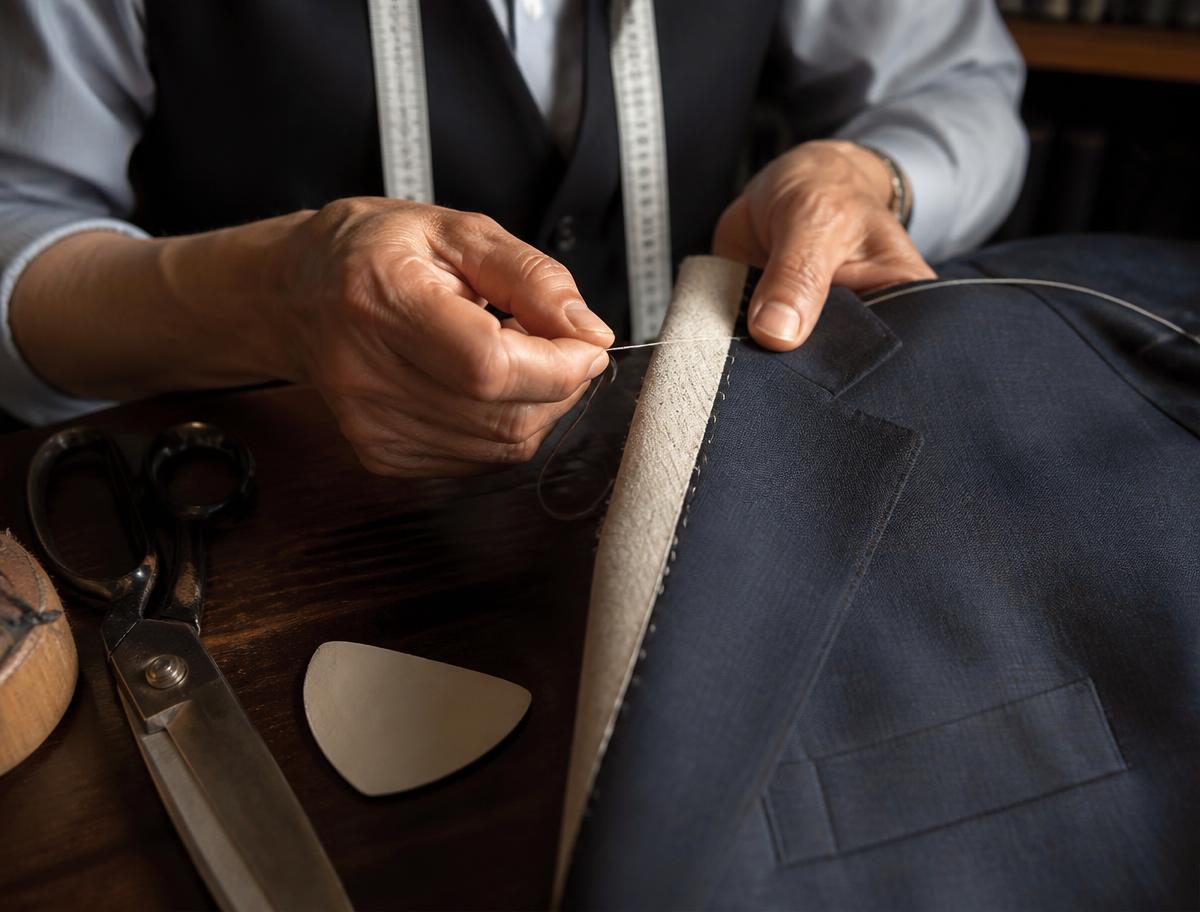
For a bespoke jacket with a floating horsehair canvas and hand-padded lapels, frequent solvent exposure and the heat of commercial pressing can also flatten the roll of a lapel or soften the chest canvas faster than normal wear would. This is one reason experienced tailors and cleaners alike recommend reserving it for when it is genuinely needed.
What to do between cleanings
Brushing after each wear removes the majority of surface dust and skin cells that would otherwise work into the weave. Hanging the suit to air out overnight, ideally somewhere with good ventilation, lets residual moisture from body heat evaporate before the next wear — this alone prevents most of the odour and staleness people mistake for a reason to dry clean.
For small marks, a damp cloth and gentle blotting, followed by air drying away from direct sun, handles most everyday spots without solvent. Steaming between wears also freshens the cloth and relaxes wrinkles without the wear and tear of a full clean.
Bangkok's climate changes the equation slightly
In a hot, humid city like Bangkok, sweat and moisture build up faster than in a temperate climate, which can tempt people to over-clean. The better response is more frequent airing and brushing, plus lighter-weight, breathable cloths for daily wear, rather than more trips to the dry cleaner — solvent cleaning does nothing to address humidity itself and can leave a suit smelling faintly chemical in a way that muggy air only amplifies.
If a suit does need cleaning, choose a cleaner experienced with tailored garments and ask them to use minimal pressing, so the canvas and lapel roll are preserved.
How Manchester Tailor BKK helps you keep a suit longer
Because our suits are cut from directly imported cloth and finished by hand, we build them to reward exactly this kind of restrained care. At your final fitting, our tailors will point out any fabric-specific quirks — a wool-linen blend that creases differently, for instance — so you know from day one how to keep it looking its best.
Our pick-up and delivery service in Bangkok also means you never need to make a special trip just to have a suit pressed or checked between cleanings.
Frequently asked questions
- Will dry cleaning shrink my suit?
- A reputable dry cleaner using correct solvent and heat settings should not shrink wool, but repeated aggressive pressing can gradually distort the shape, which is another reason to limit frequency.
- What should I do if I spill something on my suit?
- Blot gently, avoid rubbing the stain in, and take it to a professional cleaner as soon as practical rather than waiting for a routine clean.
- Is steaming a substitute for dry cleaning?
- Steaming freshens and de-wrinkles the cloth but does not remove oil-based stains or deep soiling, so it complements rather than replaces occasional dry cleaning.