





The short answer
The simplest way to avoid overdoing suit accessories is to limit the outfit to a maximum of three visible accent points — typically tie, pocket square and one piece of jewellery — and to keep metals and colours consistent across all of them. In Bangkok's business and social settings, a well-cut suit is the primary statement, and accessories should support the fit rather than compete with it.
Why Restraint Reads as More Expensive
There is a reliable pattern in how well-dressed men are perceived: the fewer visible accessory decisions there are, the more expensive and considered the whole outfit looks, provided the underlying suit fits properly. This is because a bespoke suit's value is communicated through fit and drape — the shoulder line, the roll of the lapel, the break of the trouser — and too many competing accessories pull the eye away from those details rather than reinforcing them.
A useful working limit is three accent points per outfit: for example, tie, pocket square and watch, or tie, cufflinks and belt. Beyond three, an outfit generally starts to look assembled rather than worn, even if each individual piece is well chosen.
How to Accessorise a Suit Without Overdoing It: The Metal Rule
One of the fastest ways to look overdone without realising it is mixing metal tones across accessories in the same outfit. A silver watch with gold cufflinks and a silver belt buckle is a small but noticeable inconsistency. Pick one metal tone — silver, gold, or a neutral like gunmetal — and keep every visible piece of hardware in that family: watch case, cufflinks, belt buckle, tie clip and shoe buckle, if any of these are worn.
This single rule solves more overdressing problems than any colour or pattern advice, because metal mismatches are visually loud even in an otherwise restrained, neutral-coloured outfit.
Jewellery: Less Is More in Business Dress
For business dressing, a watch and a wedding band, where applicable, are typically sufficient. A single signet ring or a discreet lapel pin can be added without tipping into excess, but bracelets, necklaces worn outside the shirt, and multiple rings move an outfit toward fashion-forward or social dressing rather than standard business tailoring. This is not a moral judgement on personal style — it is simply a description of what reads as considered restraint in a professional context in Bangkok and most other business centres.
Tie Clips, Lapel Pins and When to Use Them
A tie clip is a functional accessory as much as a decorative one — it keeps the tie in place and adds a small amount of shine when placed correctly, roughly between the third and fourth shirt button. It should match the metal tone of the watch and belt buckle, and it is generally skipped altogether with a three-piece suit, since the waistcoat already holds the tie in place.
A lapel pin or boutonnière is typically reserved for weddings, formal events, or as a subtle personal signature rather than daily business wear. When worn, it should be the only decorative element on the jacket itself, since a pocket square and a lapel pin together on a business suit can tip into overdone territory quickly.
Letting the Suit Fit Do the Talking
The single most effective way to accessorise well is to start from a suit that fits properly, because a well-fitted bespoke jacket and trouser reduce the need for accessories to distract from anything. Shoulders that sit flat without divots, a collar that hugs the neck without gapping, and a trouser break that is clean rather than pooling all read as put-together before a single accessory is added.
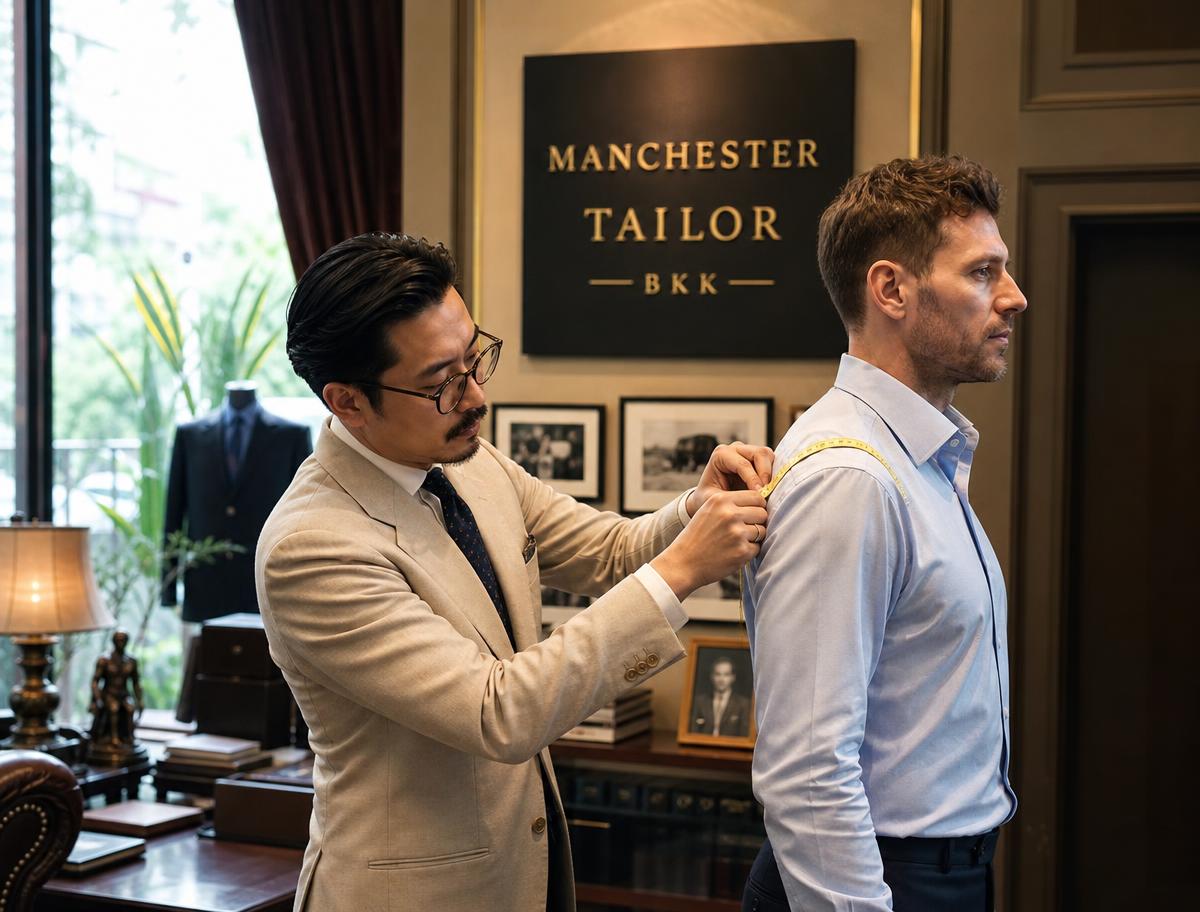
This is one of the practical arguments for genuine bespoke construction — an individual paper pattern cut from your own measurements, refined across multiple fittings, produces a silhouette that needs less visual assistance from accessories than an off-the-rack or adjusted made-to-measure garment. Manchester Tailor BKK builds every suit from a hand-cut, individual pattern developed across the fitting process precisely for this reason.
A Simple Pre-Departure Checklist
Before leaving for a meeting or event, a quick check helps catch over-accessorising: count the visible accent points (aim for three or fewer), check that all metal is one tone, confirm the tie and pocket square are not identical, and make sure no more than two patterns are in play across the whole outfit. This thirty-second habit catches most common mistakes before they leave the house.
Frequently asked questions
- How many accessories is too many for a business suit?
- As a working guide, more than three visible accent points — such as tie, pocket square, watch, cufflinks and a ring all at once — usually tips a business outfit into overdone territory.
- Is it acceptable to wear no accessories at all?
- Yes — a well-fitted suit, shirt and tie with no further accessories is complete and appropriate for almost any business occasion.
- Should a wedding ring count toward the accessory limit?
- Practically, no — a wedding band is treated as a given rather than a style choice, so it does not need to be counted against the three-accent guideline.