





The short answer
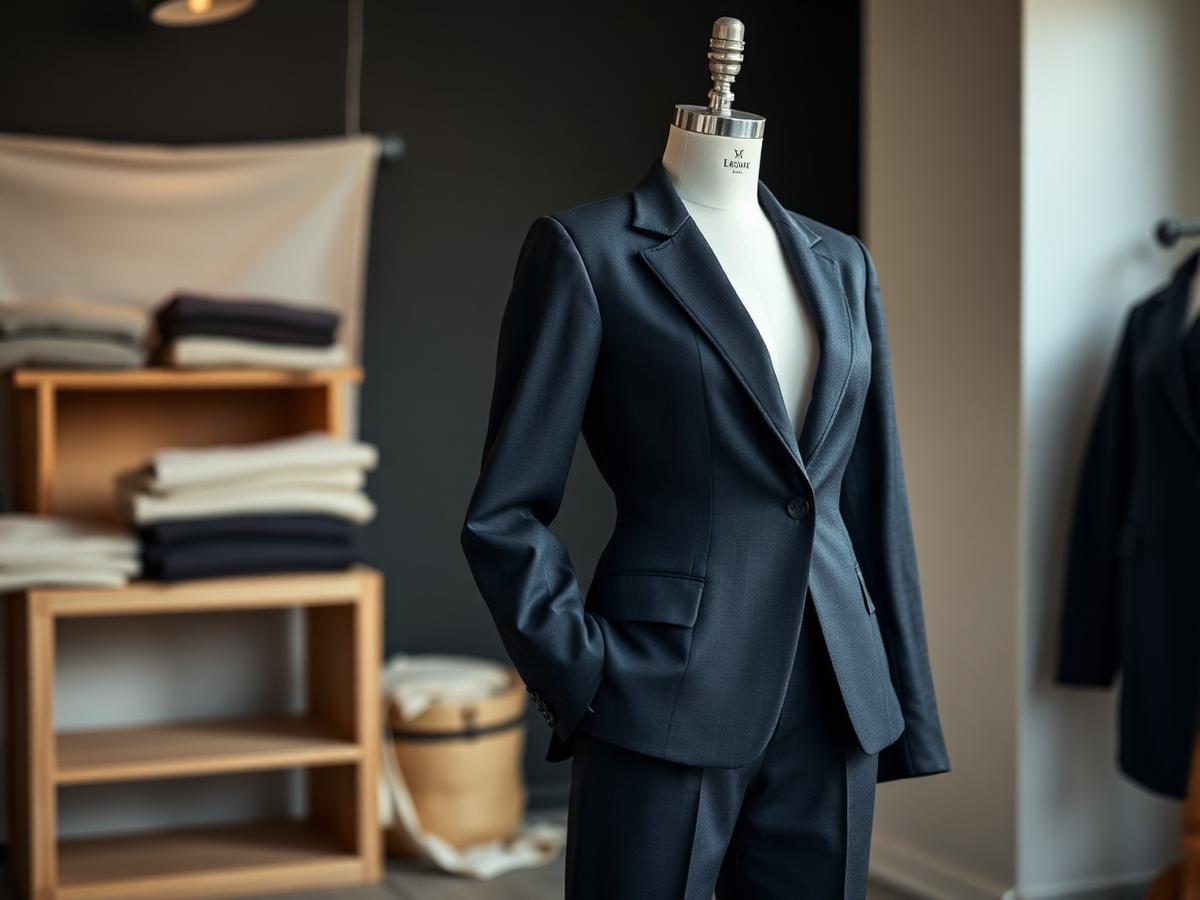
A bespoke suit for women is built from an individual pattern that accounts for bust dart placement, waist suppression and hip spring — structural differences from a men's block, not simply a smaller version of a man's suit. In Bangkok, where tropical-weight cloth and multiple fittings matter as much for women's tailoring as men's, Manchester Tailor BKK builds each women's suit from its own pattern through the same hand-cutting and fitting process used for its menswear.
Why a Women's Suit Needs Its Own Pattern
A woman's suit cannot be correctly produced by simply scaling down a men's pattern, because the underlying body shape it needs to follow is structurally different. A men's block is drafted for a relatively straight line from chest to waist to hip; a women's block has to account for a bust dart to shape the fabric over the chest, waist suppression to bring the jacket in at the narrowest point of the torso, and hip spring to let the fabric release smoothly over the hips without straining or bunching. Ignoring any one of these three elements is what produces the boxy, ill-fitting effect common in suits that have simply been resized from a men's pattern rather than drafted specifically for a woman's body.
This is why genuine bespoke tailoring for women starts with its own individual paper pattern, drafted from the client's own measurements rather than adapted from an existing block. It is more labour-intensive than adjusting a standard size, but it is the only reliable way to produce a jacket that sits correctly through the chest and waist without gaping, pulling or excess fabric.
Sleeve Pitch and Shoulder Line
Sleeve pitch — the angle at which the sleeve is set into the armhole — is another area where women's tailoring differs meaningfully from men's. Women's shoulders and arm carriage are typically set at a slightly different angle than men's, and a sleeve pitched incorrectly for that difference will cause the jacket to pull across the back or bunch at the front of the armhole when the arm is at rest, which is one of the most common fit failures in women's ready-to-wear and made-to-measure tailoring.
Getting sleeve pitch right requires observing the client's natural arm position during a fitting, not just taking a static measurement, which is one of the reasons multiple fittings matter as much for women's bespoke tailoring as they do for men's — a single measurement session cannot fully capture how a garment will move with the body.
Bespoke Suits for Women: What the Process Involves
The bespoke process for a woman's suit follows the same fundamental sequence as menswear — consultation, detailed measurement, pattern drafting, hand cutting, construction, and at least one fitting to adjust the unfinished garment before final finishing. What changes is the pattern itself and the specific measurement points taken: bust, underbust, waist and high hip are all recorded in addition to the standard chest, waist and hip figures used for menswear, since the additional data is what allows the pattern to be shaped correctly through the torso.
Fabric choice follows similar logic to menswear, with one additional consideration: women's suiting often uses slightly lighter-weight cloths even at equivalent formality levels, since jackets are frequently worn over blouses rather than shirts and undershirts, and the silhouette is generally closer to the body. In Bangkok's climate, this makes tropical-weight wool and wool-blend cloths particularly well suited to women's business suiting, offering structure without excessive warmth.
Trousers, Skirts and Choosing a Silhouette
A bespoke women's suit can be ordered with trousers, a skirt, or both cut to the same jacket, which is one of the practical advantages of building a wardrobe bespoke rather than buying separate ready-to-wear pieces that were never designed to be worn together. Trousers require their own set of considerations around rise, waist suppression and leg line, while a skirt suit needs the waist and hip measurements translated into a different kind of ease and movement, particularly through the hip and hem.
Neither option is inherently more formal than the other in a modern business context; the choice generally comes down to personal preference, workplace norms, and how the piece will be worn day to day, including in Bangkok's climate where trouser length and cloth weight both affect comfort more than skirt length does.
What to Expect From a First Consultation
A first consultation for a women's bespoke suit typically covers intended use (business, formal event, everyday wear), preferred silhouette (fitted through the waist versus a more relaxed cut), fabric selection from the available library, and a full set of measurements. From there, a pattern is drafted and the garment is cut and constructed, with at least one interim fitting to check the unfinished piece before final adjustments and finishing.
Because the pattern is built specifically for the individual client and retained afterward, subsequent orders — additional blazers, trousers or dresses — can move faster, since the base pattern only needs adjusting rather than redrafting from scratch, similar to how a returning men's client benefits from a pattern already on file.
Choosing a Tailor for Women's Bespoke Work in Bangkok
Not every tailoring house that offers menswear treats women's tailoring with equivalent seriousness — it is common for women's suiting to be handled as an afterthought using adapted men's patterns rather than a proper women's block. When evaluating a Bangkok tailor for women's bespoke work, it is worth asking directly whether the house drafts individual women's patterns, how many fittings are included, and whether the fabric library includes cloths genuinely suited to women's suiting rather than only menswear.
Manchester Tailor BKK, established in Bangkok in 2000, applies the same hand-cutting standard and individual-pattern approach to women's tailoring as it does to menswear, drawing from the same directly imported fabric library of more than 5,000 cloths, with fittings scheduled at the Khaosan Area showroom or through the in-hotel fitting service for clients with limited time in the city.
Frequently asked questions
- Is a women's bespoke suit more expensive than a men's suit?
- Pricing depends on the specific garments, fabric and construction rather than gender; a women's blazer and a men's jacket of comparable complexity and cloth are priced on the same basis. Current package pricing is listed on our packages and pricing page.
- How many fittings does a bespoke women's suit typically need?
- At minimum one interim fitting to check the unfinished garment, though more structured or fitted silhouettes may benefit from an additional fitting to refine bust and waist shaping.
- Can a bespoke women's suit be made in a tropical-weight fabric?
- Yes — tropical-weight wool and wool blends are a common and practical choice for women's business suiting in Bangkok's climate, offering structure without excessive warmth.
- Does a women's suit pattern get reused for future orders?
- Yes — once a pattern is drafted from a client's measurements, it is kept on file and adjusted rather than redrafted from scratch for future garments.