




The short answer
A tuxedo, or dinner suit, is a specific style of formal suit distinguished by silk-faced lapels (satin or grosgrain), a black or midnight-blue cloth, and details like covered buttons and satin trouser stripes, worn strictly for black-tie occasions. A regular suit covers a much broader range of colours, fabrics and formality levels, and is worn for business, weddings and everyday occasions where black tie isn't specified.
What's the Difference Between a Suit and a Tuxedo?
Every tuxedo is technically a suit, but not every suit qualifies as a tuxedo. The defining feature is the silk facing on the lapel — satin or grosgrain — which doesn't appear on business or daytime suits at all. Tuxedos are also traditionally cut in black or midnight blue, worn with a black bow tie, and paired with a formal dress shirt rather than an ordinary business shirt.
Other construction details separate the two as well: tuxedo jackets typically use covered buttons finished in the same satin as the lapel, and trousers often carry a matching satin stripe down the outer seam — neither of which appears on a standard suit.
When to Wear a Tuxedo vs. a Suit
The dress code makes the decision for you in most cases. If an invitation specifies black tie, a tuxedo is required — a dark suit, however sharp, doesn't meet that standard. For business, cocktail attire, and the vast majority of weddings, a well-cut suit is the correct and expected choice, and a tuxedo would be overdressing.
Fabric Choices for Tuxedos vs. Suits
Because a tuxedo is worn far less frequently than a business suit, the fabric can lean into a slightly heavier, richer wool without the everyday-wear concerns that guide business suiting. That said, for a Bangkok wardrobe, a lighter wool barathea or fine worsted keeps the tuxedo wearable at indoor evening events without excess warmth, since the room is typically air-conditioned but the arrival and departure won't be.
Ordering a Tuxedo Bespoke vs. Off-the-Rack
Because a tuxedo is worn on some of the most photographed occasions in a man's calendar — galas, weddings as a guest, formal dinners — fit matters disproportionately compared to how often it's worn. A bespoke tuxedo, cut from an individual pattern rather than adjusted from stock sizing, avoids the common off-the-rack issues of gaping collars or overly long sleeves that show up clearly in photographs.
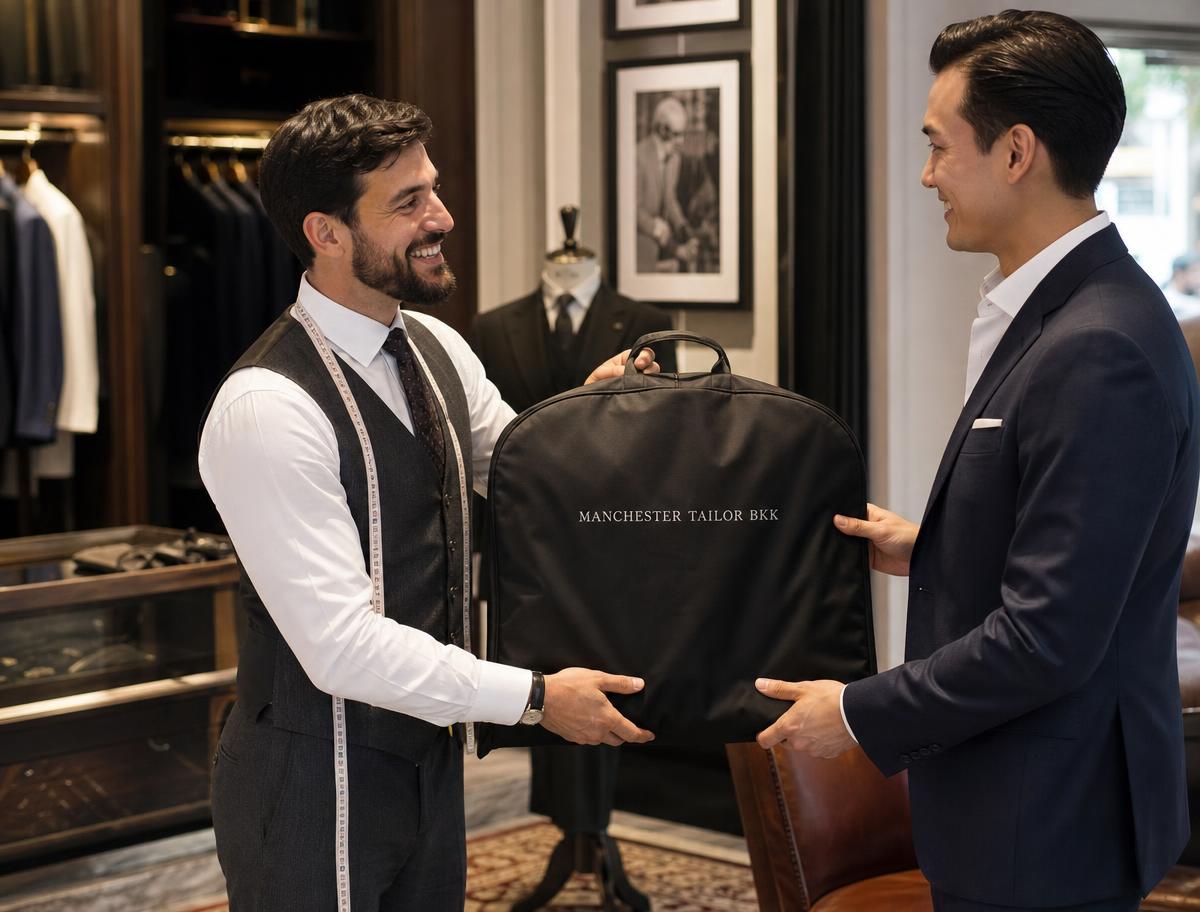
Manchester Tailor BKK's approach — hand cutting, multiple fittings and directly imported cloth — applies equally to tuxedo commissions, ensuring the satin lapel sits flat against the body rather than pulling or bubbling, a common flaw in mass-produced formalwear.
Frequently asked questions
- Can I wear a dark navy suit instead of a tuxedo for a black-tie event?
- Not strictly — black tie calls for a genuine tuxedo with satin lapels; a dark suit, however well made, doesn't meet the dress code.
- Is midnight blue or black better for a tuxedo?
- Both are traditional and acceptable; midnight blue can actually appear richer than black under artificial evening lighting, which is why it's a longstanding alternative.
- Do I need a separate tuxedo shirt?
- Yes — a formal dress shirt with a suitable collar (often a wing or turndown collar for black tie) is expected with a tuxedo rather than an ordinary business shirt.