




The short answer
A center vent is the most common and casual option, offering easy movement at a lower cost of construction; double side vents allow for a cleaner line and better movement, particularly for hands in pockets, and are the traditional choice on more formal and English-style tailoring; a ventless jacket gives the cleanest silhouette but restricts movement and is now largely reserved for tuxedos. The right choice depends on formality, body type and how much you need to move in the jacket.
Suit Vents Explained: What's the Difference?
The vent is the slit (or slits) at the back of a jacket below the waist, and it exists to allow the jacket to move with the body — sitting, walking, reaching into a pocket — without pulling or bunching at the seat. A center vent has a single slit in the middle of the back. Side vents place a slit on each side, near the hips. A ventless jacket has no slit at all.
Center Vents: Common and Practical
The center vent is the most widely used style, particularly on American-influenced and off-the-rack tailoring, largely because it's simpler and cheaper to construct. It works well enough for everyday movement but can gape slightly when hands are placed in trouser pockets, since there's only one point of give at the back.
Side Vents: The Bespoke Standard
Double side vents are the traditional choice in English tailoring and remain a common recommendation in bespoke construction, since the two slits allow the jacket to fall cleanly on either side of the hips whether the wearer's hands are in pockets or not. They also tend to suit a broader range of body types, since the vents sit away from the center seam and don't draw attention to the small of the back.
No Vent: Clean Lines, Formal Use
Ventless jackets give the smoothest, most minimal silhouette from behind, which is why the style survives mainly on tuxedos and very formal dinner jackets today. Outside black tie, a ventless jacket can restrict movement noticeably and is rarely chosen for business or daily wear.
Which Vent Style Suits Bangkok Wear Best?
For a business suit worn through a full day of sitting, walking and moving between air-conditioned interiors and Bangkok's heat, double side vents generally offer the most practical range of motion. They're a sound default recommendation for anyone unsure which style to choose, particularly for a first bespoke commission.
How This Detail Is Handled at Manchester Tailor BKK
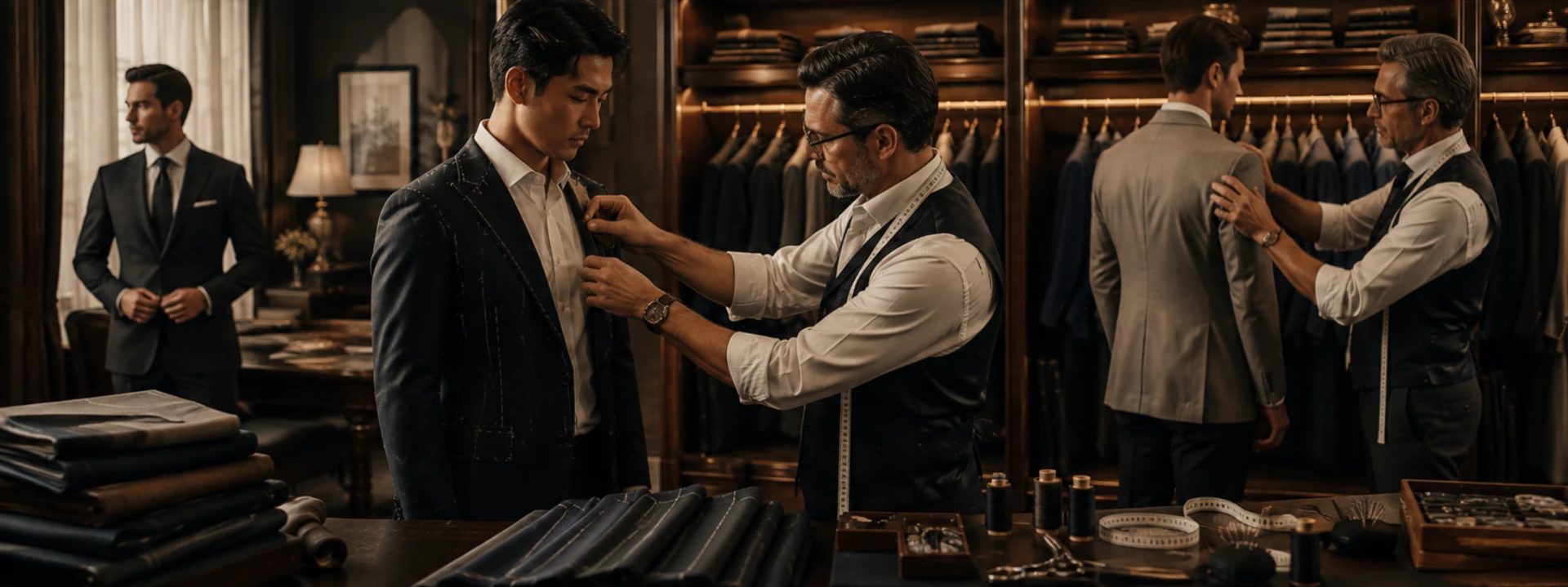
Vent style is one of the smaller decisions made during the consultation stage, but it's cut directly into the pattern along with the jacket's overall silhouette, so the finished garment moves the way it's meant to rather than being an afterthought. Clients who aren't sure which vent suits their body type and lifestyle are guided through the trade-offs before the pattern is finalised.
Frequently asked questions
- Which vent style is most versatile?
- Double side vents are generally the most versatile, offering clean movement across both business and semi-formal contexts.
- Should a tuxedo have a vent?
- Traditionally no — ventless construction gives the cleanest silhouette for black tie, though double side vents are also acceptable on modern dinner jackets.
- Does vent style affect how the jacket fits at the waist?
- Not directly, but it does affect how the jacket behaves when you move, sit, or put your hands in your pockets.