



The short answer
A business suit is a matching jacket-and-trouser set in conservative wool, built for daily office wear; a formal suit uses darker cloth and more precise construction for weddings and black-tie-adjacent events; and a smart-casual blazer is a standalone jacket, often in a more textured or seasonal fabric, worn with separate trousers for a more relaxed, versatile look. Knowing which one an occasion calls for prevents both underdressing and overdressing.
Business Suits vs. Formal Suits vs. Smart-Casual Blazers: The Key Differences
The clearest distinguishing factor across these three is matching versus non-matching, and formality of cloth. A business suit is a matched jacket and trouser in a conservative colour and weave. A formal suit takes that same matched structure but leans into darker, richer cloth and more exacting construction for higher-stakes occasions. A smart-casual blazer breaks the matching convention entirely — the jacket is designed to be worn with separate, often contrasting trousers.
Business Suits: The Office Standard
Business suits in navy, charcoal or mid-grey worsted wool remain the expected standard in most Bangkok corporate environments, particularly finance, law and client-facing roles. The priority here is consistency and durability — a fabric and construction that holds up to regular wear across a working year.
Formal Suits: Elevated for the Occasion
Formal suits — for weddings as a guest, award ceremonies, or upscale dinners — typically use a darker or more refined cloth than a business suit, sometimes with a subtle sheen or fine herringbone texture, and a closer, more considered fit given the occasion's higher visual stakes.
Smart-Casual Blazers: Versatile and Climate-Friendly
A smart-casual blazer, often cut from linen, cotton or a wool-linen blend, is designed for flexibility — worn over chinos or odd trousers rather than a matching suit trouser. This category has grown in relevance in Bangkok, where the heat makes a full suit impractical for many social or lightly professional settings, but a bare shirt reads too casual.
How to Tell Which One an Occasion Requires
Reading the dress code or the setting is usually enough to decide: an office with a formal dress policy calls for a business suit; a wedding invitation or gala calls for a formal suit; and a business dinner, casual work event, or travel setting is often well served by a smart-casual blazer. When in doubt, a business suit is rarely wrong, while a blazer risks underdressing for genuinely formal occasions.
Building a Wardrobe Across All Three
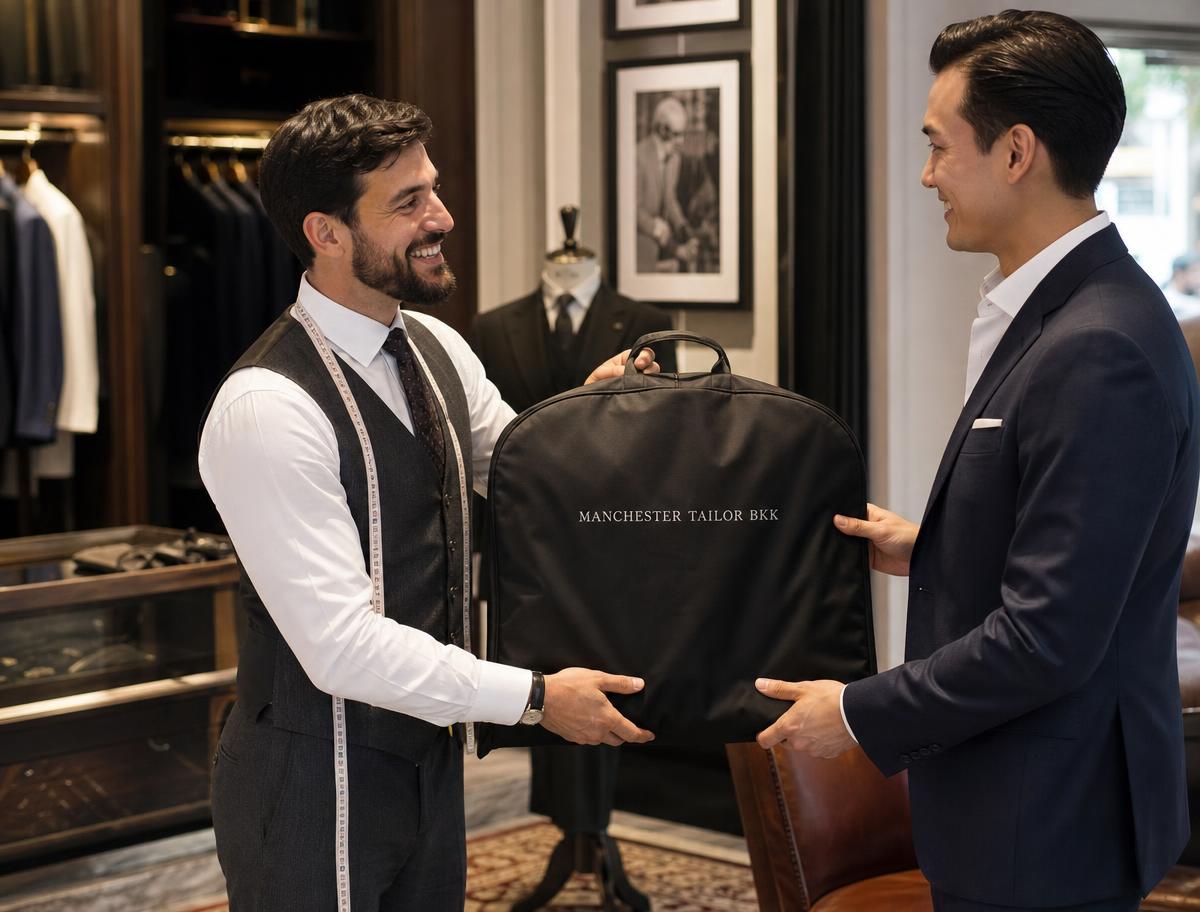
Because these three categories serve different purposes, clients building a bespoke wardrobe at Manchester Tailor BKK often commission across all of them over time rather than trying to make one garment do every job. With direct access to over 5,000 fabrics and an individual pattern for every client, the atelier can match the right cloth weight and finish to each category without repeating the same fabric across categories where it doesn't belong.
Frequently asked questions
- Can a blazer replace a business suit for a job interview?
- Generally not — a matching business suit remains the safer, more expected choice for interviews in most professional settings.
- What fabric works best for a smart-casual blazer in Bangkok?
- Linen, cotton, or a linen-wool blend offer good breathability while still holding a tailored shape.
- Is it acceptable to wear a formal suit to the office?
- It's not incorrect, but it can read as overdressed for a daily office setting compared to a standard business suit.