




The short answer
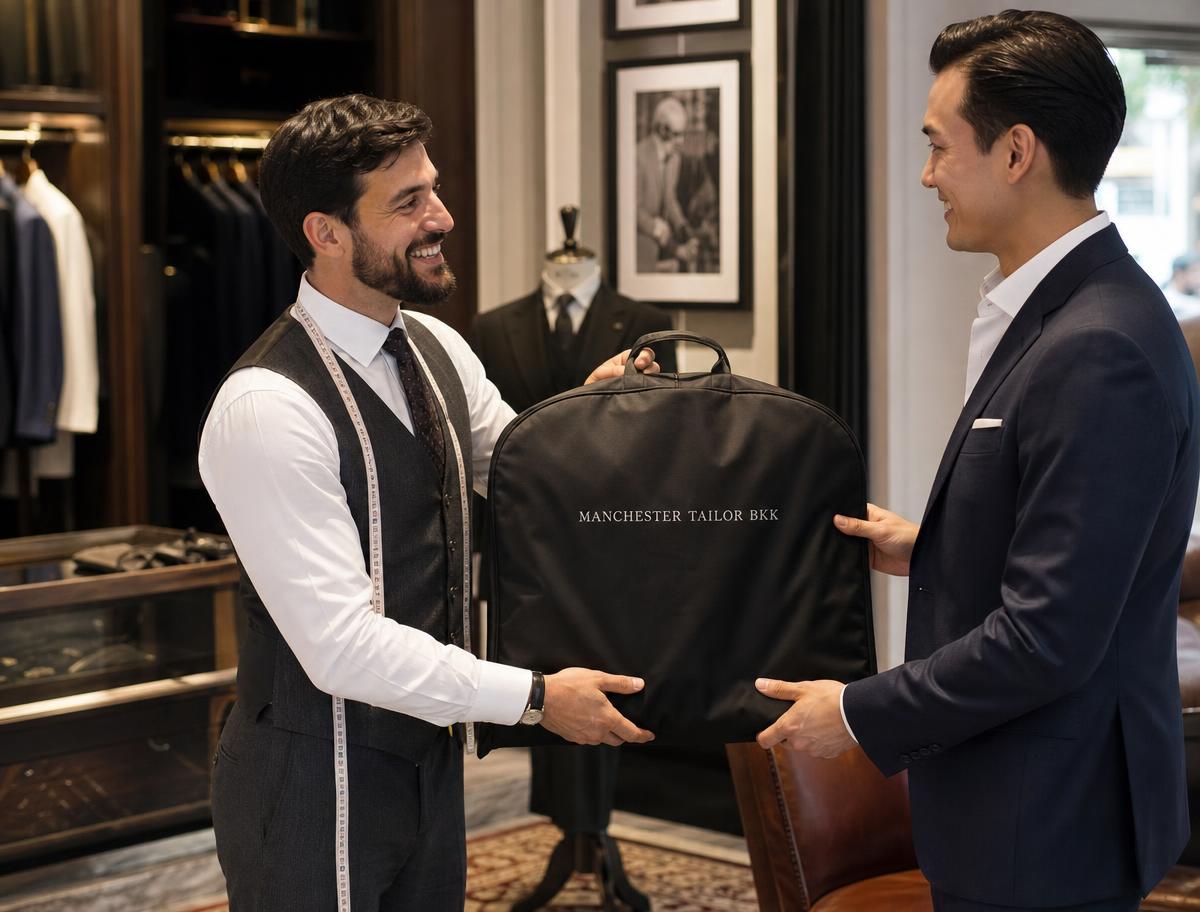
A functional business suit wardrobe starts with a navy and a mid-grey suit in year-round weight cloth, paired with a rotation of white and light-blue shirts, before expanding into a third suit, separate odd trousers and jackets, and occasion-specific pieces. In Bangkok's climate, tropical-weight wool should replace standard suiting weight across the board, since a wardrobe built for a temperate office will be uncomfortable worn daily here. Manchester Tailor BKK's package structure is designed around this kind of staged wardrobe-building, letting professionals add pieces progressively rather than committing to everything at once.
Building a Wardrobe in Stages, Not All at Once
A common mistake among professionals building a business wardrobe is trying to buy everything at once, which usually results in either overspending or settling for compromises across every piece. A more sensible approach treats the wardrobe as a staged build — starting with the most versatile pieces, then adding variety and specificity as the core is solid. This also allows fit and preferences to be refined progressively, with each new commission benefiting from what was learned on the last.
Building a Business Suit Wardrobe: What Every Professional Needs
- A navy suit — the most versatile single piece, appropriate for meetings, presentations and most business social events.
- A mid-grey suit — the second core piece, offering a genuine alternative to navy rather than a near-duplicate.
- Four to six dress shirts in white and light blue, since these two colours pair with every suit and tie combination without conflict.
- A third suit in a subtle pattern — pinstripe or a fine check — once the two solids are established, adding variety without sacrificing formality.
- Separate odd trousers and a navy blazer for business-casual days that don't call for a full suit.
- One or two ties in versatile colours, plus a plain leather belt and dress shoes in black and brown.
Why Navy and Grey Come First
Navy and mid-grey aren't chosen arbitrarily — they're the two colours that pair most reliably with the widest range of shirt and tie combinations, work across the broadest range of professional contexts from client meetings to internal presentations, and photograph well under typical office and event lighting. Building the first two suits in these colours, rather than something more distinctive, maximises the number of days each suit can be worn before repetition becomes noticeable.
Once these two are established, a third suit offers the best opportunity to introduce some personality — a subtle pattern, a slightly different cloth texture, or a navy in a different weave — without compromising the wardrobe's overall versatility.
Fabric Weight for a Bangkok Office
A business wardrobe built for daily wear in Bangkok needs to account for the reality of moving between air-conditioned offices, humid outdoor commutes, and client meetings across the city. Tropical-weight wool, generally in the 200 to 260 gram range, handles this shift far better than the heavier wools common in temperate-climate tailoring, which can feel stifling the moment you step outside.
It's worth discussing fabric weight explicitly with your tailor rather than assuming standard suiting cloth will work, since off-the-rack suits sold in Bangkok are sometimes cut from the same weight cloth used for colder markets, simply because it's more readily available to import in bulk.
Expanding Beyond the Core: Separates and Business Casual
As many Bangkok offices have relaxed toward business casual on certain days, a wardrobe built purely around matching suits leaves a gap. Odd trousers — cut and finished like suit trousers but designed to be worn on their own — paired with a navy blazer or unstructured jacket, cover this middle ground between a full suit and overly casual dressing.
This is also where personal style can appropriately expand: a wider range of shirt colours, more casual but still tailored trousers, and jackets in interesting textures like a soft flannel or a subtle herringbone give a professional wardrobe more range without sacrificing a polished appearance on lower-formality days.
Planning the Build With a Single Tailor
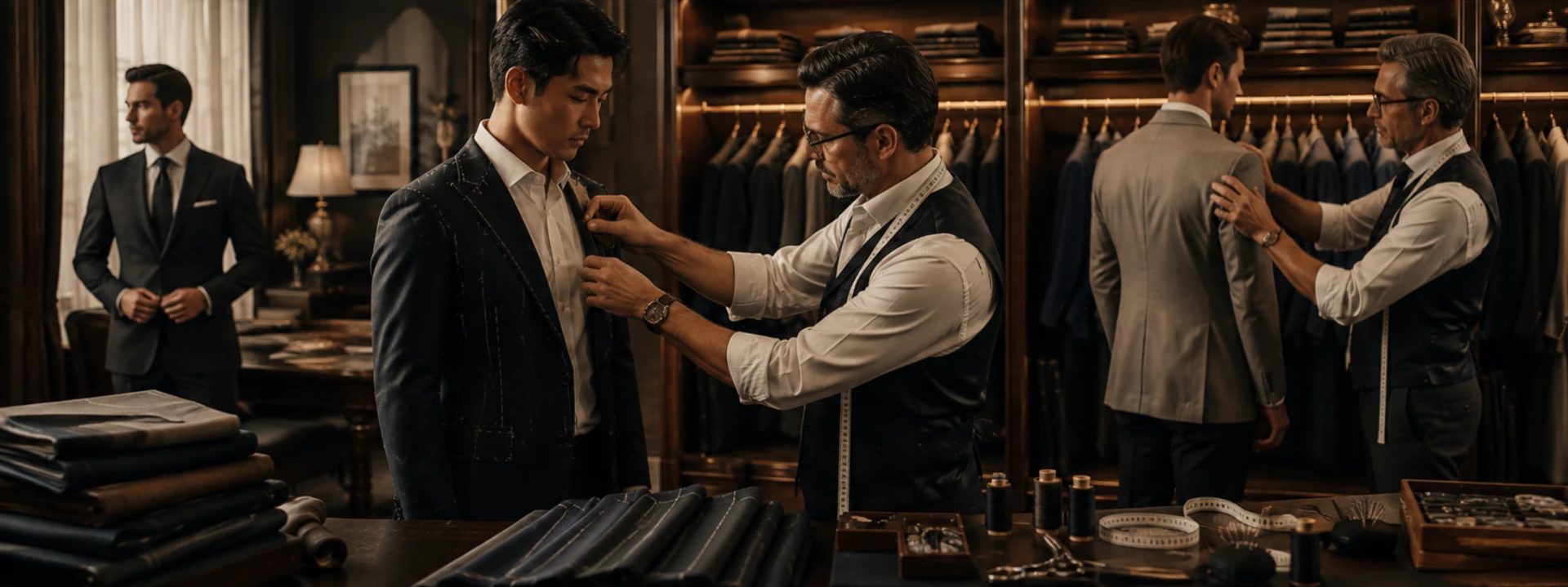
Building a wardrobe progressively with one tailor, rather than sourcing pieces from multiple sources, has a practical advantage beyond consistency of quality — an established pattern on file means each new suit benefits from fit corrections made on the previous ones, and repeat commissions typically require fewer fitting stages than a first order. This is part of why a structured package approach, ordering multiple pieces with a plan rather than one at a time reactively, tends to produce a more cohesive and better-fitting wardrobe overall.
Frequently asked questions
- Should I buy navy or grey first?
- Navy is generally the more versatile starting point, working across a slightly wider range of contexts, though either is a reasonable first choice.
- How many suits does a working professional in Bangkok actually need?
- A comfortable rotation is usually three to five suits plus separates, though this depends heavily on how often your role requires formal dress.
- Is standard suiting wool too heavy for Bangkok?
- Generally yes for daily wear — tropical-weight wool in the 200 to 260 gram range is far more practical for the climate.